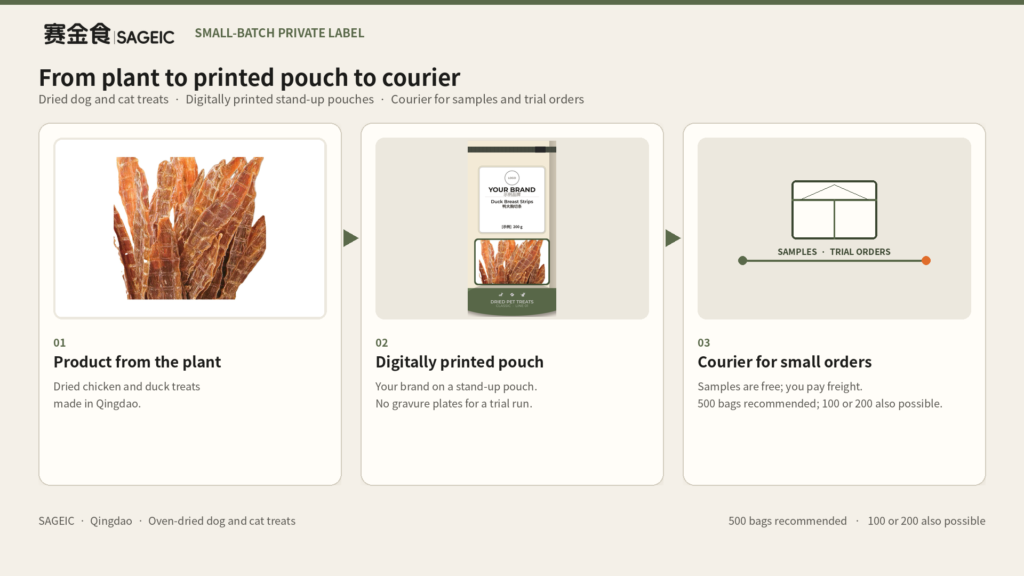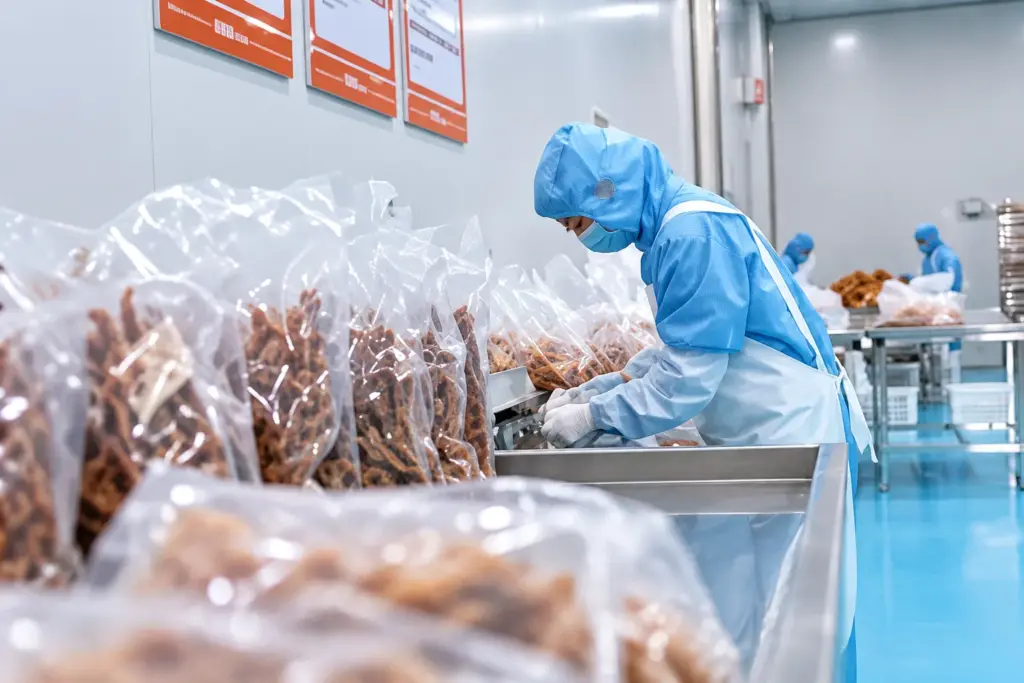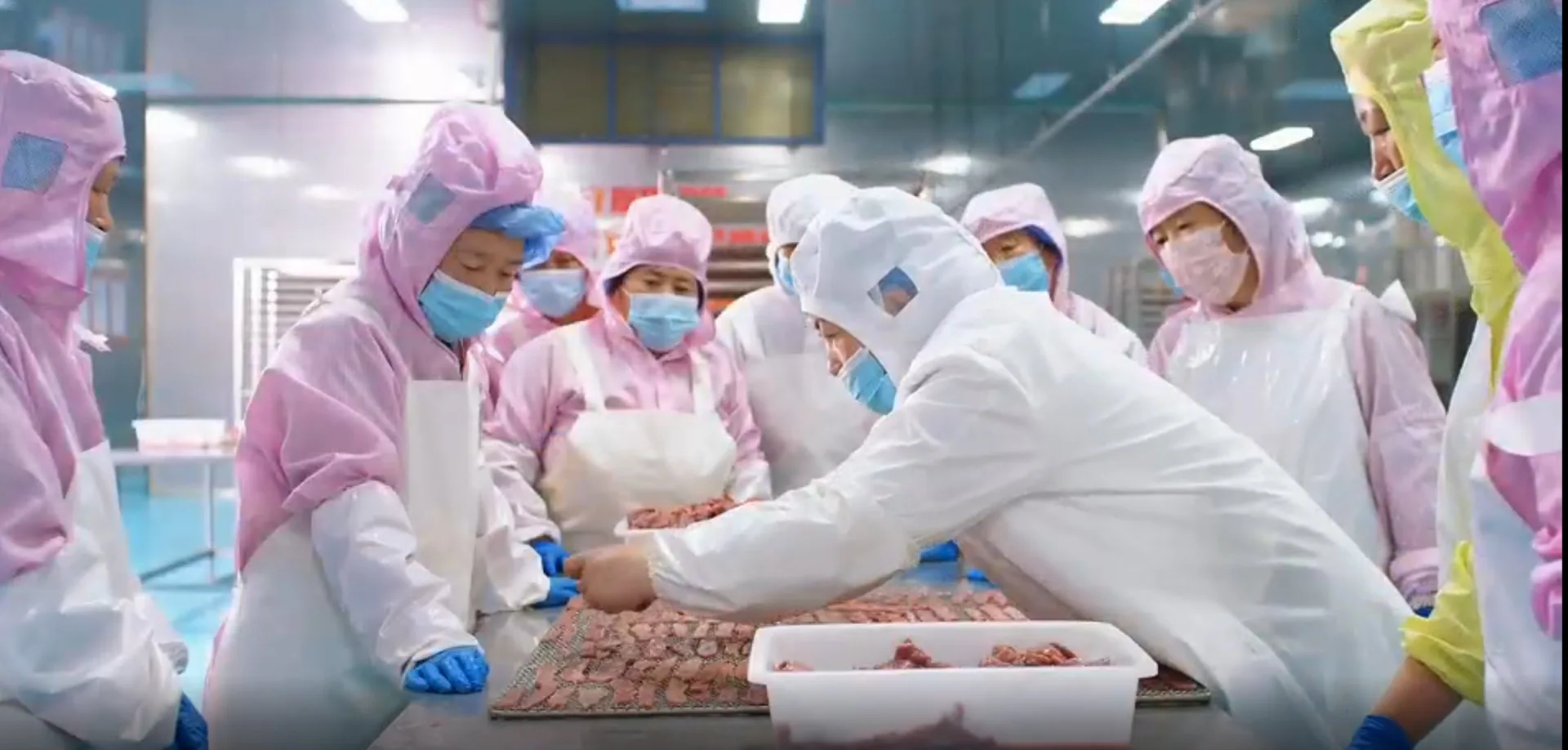
Single-ingredient dog treats give a private label range a straightforward starting point: one declared ingredient, a recognisable product and a clear description. But a chicken treat, a single animal protein treat and a product in a “natural” range can have different ingredient lists. Before choosing samples or printing a pouch, establish exactly which description fits the SKU you are buying.
This guide compares those choices using examples from SAGEIC’s dried pet treat catalogue. It focuses on ingredient selection and range planning. For sample approval, packaging and repeat-order controls, we link to the relevant guides below.
Single ingredient, single animal protein and formulated: the differences
Use the following distinctions when discussing a product brief. They help define the intended recipe; the final claim and ingredient declaration still need review for the destination market.
| Description | What to check | Example |
|---|---|---|
| Single ingredient | The agreed product has one ingredient. Confirm the full formulation and any relevant processing aids. | Chicken breast strips made with chicken breast alone. |
| Single animal protein | One animal species supplies the animal protein. The recipe may also contain plant ingredients or other components. | Chicken and sweet potato contain two ingredients, with chicken as the animal protein source. |
| Multiple animal proteins | Check the species behind every animal-derived component, including the chew core. | Chicken wrapped around rabbit ears contains chicken and rabbit. |
| Formulated recipe | Review every component and its purpose. The animal protein may still come from one species. | A chicken tenderloin recipe with vegetable glycerin, rosemary extract and sodium ascorbate. |
These categories can overlap. “Formulated” describes a recipe with additional components; it does not, by itself, establish how many animal species are present. Likewise, a wrapped treat needs its own ingredient review: the outer meat alone does not describe the core.
Read the SKU, not just the catalogue series name
SAGEIC’s catalogue separates a Natural series and a Formulated series. Within the Natural series, some products have one ingredient and others combine meat with a second ingredient. A series heading therefore cannot establish that every item is single ingredient.
The examples below reproduce the ingredient information from the referenced catalogue. Request confirmation for the selected SKU before approving a quotation or retail artwork.
| SKU | Product | Catalogue ingredients | Buyer takeaway |
|---|---|---|---|
| SJS0005W | Chicken Breast Strips | Chicken breast | A candidate for a single-ingredient dried chicken line. |
| SJS0008W | Chicken-Wrapped Sweet Potato Sticks | Chicken breast, sweet potato | Two ingredients; chicken is the animal protein source. |
| SJS0018W | Chicken-Wrapped Rabbit Ears | Chicken breast, rabbit ears | Two animal species, despite chicken being the outer wrap. |
| SJS0002F | Whole Chicken Tenderloins (Formulated) | Chicken tenderloin meat, vegetable glycerin, rosemary extract, sodium ascorbate | A formulated chicken recipe with several ingredients. |
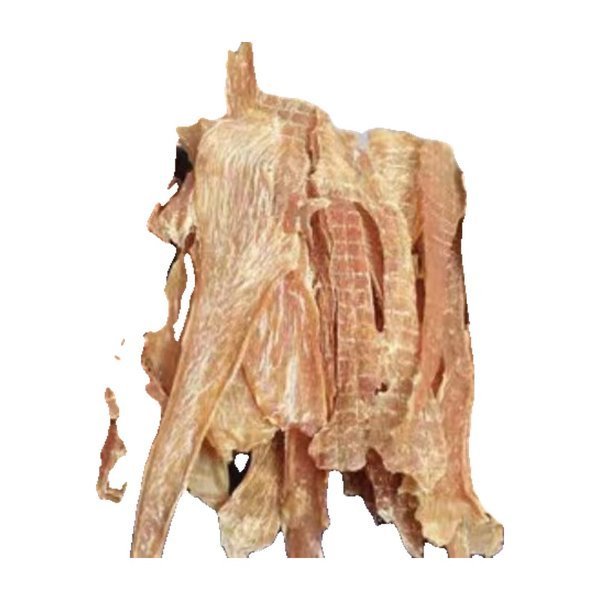
A photograph helps you assess the format, but cannot establish the ingredient list. Two tenderloin products may look similar while their recipes differ. Keep the complete SKU, including its final letter, attached to sample requests, quotations and artwork approvals.

Choose the product’s role before choosing the claim
For a range built around recognisable meat pieces and a short ingredient declaration, start by evaluating single-ingredient strips, slices or whole tenderloins. Compare the actual samples for piece dimensions, texture, aroma and variation. A one-ingredient recipe does not automatically make every format suitable for the same dog or feeding occasion.
If visual variety is part of your brief, compare a wrapped option alongside the plain meat product. Record both components, then assess how the wrap stays attached and how the complete piece fits the intended pack. Our wrapped dog treats guide explains the different core formats.
If you want a particular texture or shape, consider a formulated option as well. Ask the factory to explain the role of the additional ingredients and confirm what changes are feasible. Removing an ingredient creates a new development question: the revised product needs its own evaluation rather than an assumption that it will perform like the original.
Match label wording to the confirmed recipe
Prepare the full ingredient declaration before designing the front of the pouch. For US animal food, the FDA explains ingredient naming and order requirements, alongside federal and state labeling responsibilities. Have the importer or brand’s label reviewer check the wording for the actual selling market.
Check a “natural” claim separately. AAFCO’s explanation of natural pet food addresses ingredient sources and processing; the term does not establish that a product has only one ingredient or that it is safer. A catalogue’s internal category name should not be copied onto retail packaging without reviewing the final formulation and applicable rules.
Ingredient count alone also does not substantiate an allergy or disease-related promise. If your project has a specific ingredient-exclusion requirement, describe it precisely and ask what sourcing records and production controls can support it. Confirm the evidence and label wording before making the claim.
What to ask before ordering single-ingredient dog treats wholesale
- Identify the exact SKU. Name the product, ingredient direction, intended dog size and retail use.
- Request the complete ingredient information. Include relevant carriers, coatings and processing aids in the discussion.
- Define the sample assessment. Agree which dimensions, texture characteristics and supporting analysis you need to review.
- Confirm the finished pack. Specify net weight, pouch format, storage instructions and product-specific shelf-life information.
- Review the claim and quotation together. Check that the quoted recipe, approved sample and artwork refer to the same item.
Use our sample evaluation guide for the approval stage, then record the result in a pet treat specification sheet. Those records help keep the ingredient choice consistent when you reorder.
Frequently asked questions
Can a single animal protein treat contain sweet potato?
Yes. The recipe can contain chicken and sweet potato with chicken as its animal protein source. It would still contain more than one ingredient. Confirm the complete formulation and review the precise claim for the destination market.
Is every product in SAGEIC’s Natural series single ingredient?
No. That series also includes combinations such as chicken breast with sweet potato. Check the individual SKU’s ingredient declaration and single-ingredient field when selecting products.
Does a single ingredient mean the treat is freeze-dried?
No. Ingredient count and processing method are separate characteristics. The SAGEIC examples in this guide are oven-dried products. SAGEIC does not currently offer freeze-dried manufacturing.
Is there a minimum product order quantity?
SAGEIC sets no minimum order quantity for the pet treats themselves. Prices are calculated for the requested SKU, quantity and packing plan. Custom-printed bags may have a separate print minimum and associated charges, confirmed for the specific packaging.
Build your shortlist with SAGEIC
Send your destination market, preferred ingredient direction, product format, pack size and estimated order quantity. We can review suitable catalogue options and confirm the information needed for your quotation. Browse our pet treat range and private label service, email sales@sageicpet.com, or contact us on WhatsApp: +86 17669606473.