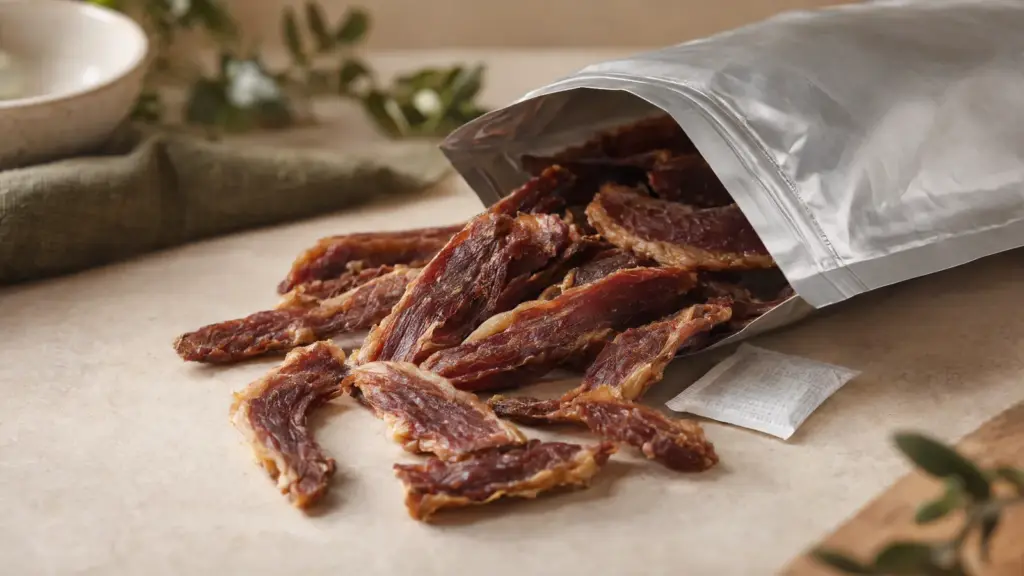
Dog treat shelf life is set by four things working together: how much water is left in the treat and how available it is to microbes (moisture content and water activity), how fast the fat oxidizes, how well the packaging keeps out oxygen and humidity, and how the product is stored and shipped. Dried meat treats packed in a high-barrier pouch with nitrogen flushing and an oxygen absorber commonly carry an 18-month unopened shelf life. Buyers protect that number by writing each factor into the spec sheet instead of relying on a single “best before” date.
Key takeaways
- Moisture content tells you how much water is in a treat; water activity (aw) tells you how much of it microbes can use. Specify both.
- Humectants such as food-grade glycerin and sorbitol let soft, chewy treats stay pliable while keeping water activity in check.
- Fat oxidation, not mold, is often what ends the shelf life of a fatty treat: watch smell, color and peroxide value.
- Packaging barrier, nitrogen flushing and oxygen absorbers protect the product only if seals are intact and the container stays dry in transit.
- Write test methods, limits and sampling into the spec sheet so every lot is judged against the same numbers.
In this guide
What Determines Dog Treat Shelf Life?
A dried meat treat fails in one of three ways: something grows on it (mold, yeast or bacteria), the fat turns rancid, or the texture drifts until customers complain that it is rock hard or sticky.
- Microbial spoilage is driven mainly by water activity, then by temperature and oxygen.
- Rancidity is driven by fat content and type, oxygen, light and heat.
- Texture and color change is driven by moisture migration, humectant level and how well the pack blocks humidity.
The manufacturer controls the first two through recipe and process. Packaging decides how long those controls hold. Storage and shipping can undo all of it, so a good spec covers the whole chain.
Moisture Content vs Water Activity in Dog Treats
Moisture content: how much water is there
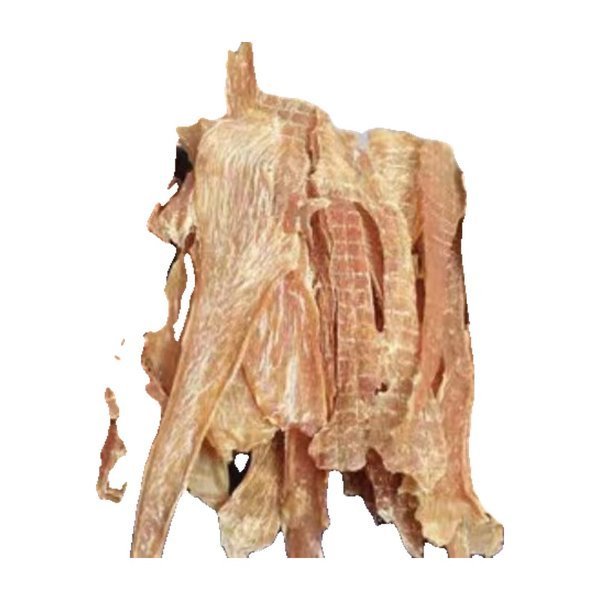
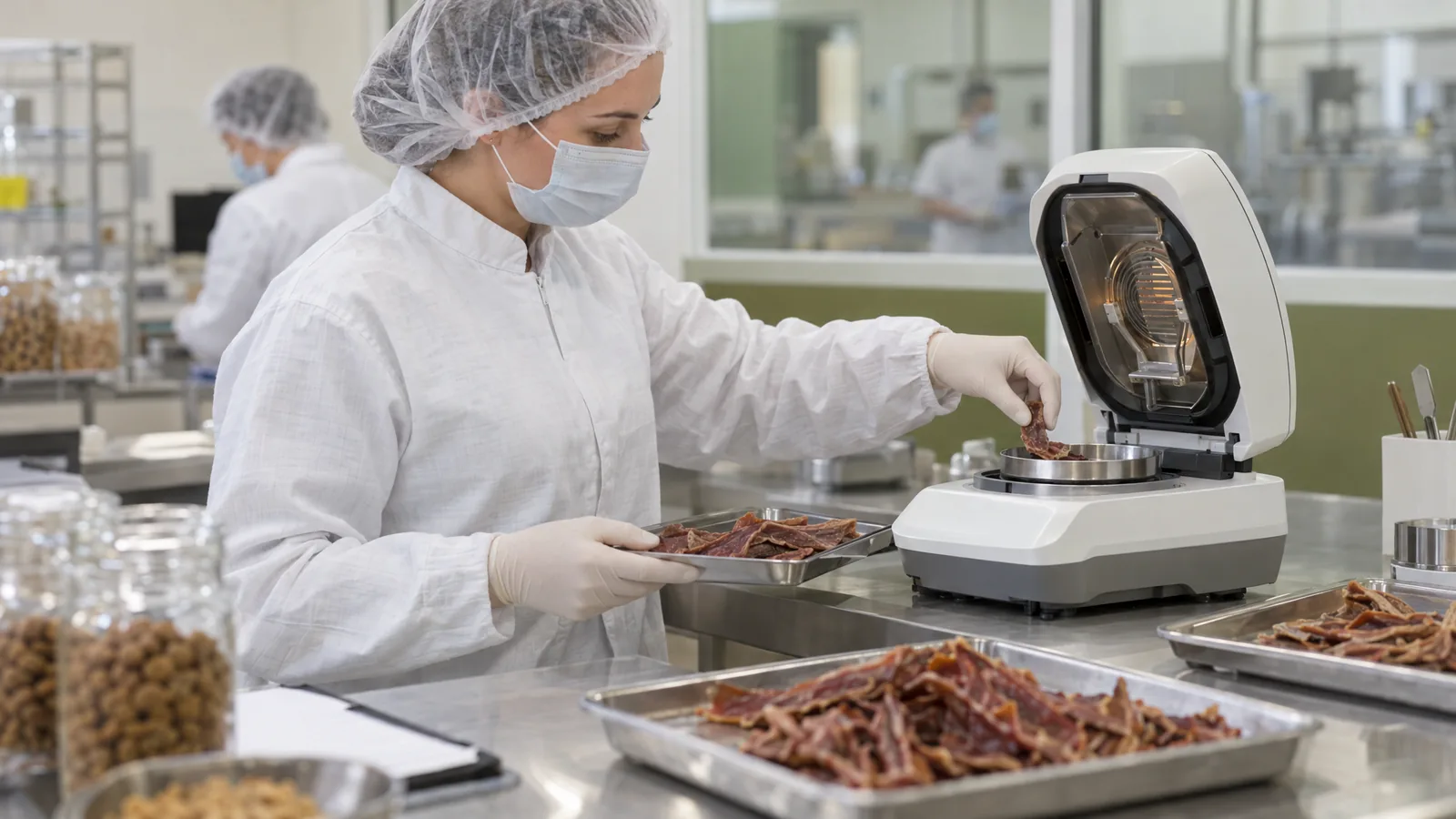
Moisture content is the percentage of the treat’s weight that is water, usually measured by oven drying or a moisture analyzer. It appears on the label as “Moisture (max)” in the guaranteed analysis, which AAFCO lists among the required label items for pet food sold in the US. For dried meat treats, typical limits are high teens to low twenties. Our catalog shows the range: Whole Duck Fillet is specified at Moisture ≤ 20.0%, softer wrapped items such as Duck-Wrapped Sweet Potato Sticks at ≤ 22.0%, and Goat Milk Biscuit Rings at ≤ 12.0%.
Water activity: how much water microbes can use
Water activity (aw) measures how “free” the water in a product is, on a scale from 0 to 1.0. Pure water is 1.0. Water that is bound to salts, sugars, proteins or humectants still counts toward moisture content, but it is not available for microbial growth, so it lowers aw. Two treats at 20% moisture can therefore have very different water activity, and very different spoilage risk.
Water activity pet treats: general thresholds
Widely cited food-science guidance gives approximate lower limits for growth. Treat these as general orientation, not as a validated limit for any specific product:
- Most bacteria, including common pathogens, need aw above roughly 0.90; a few, such as Staphylococcus aureus, can grow aerobically down to about 0.86.
- US human-food jerky guidance commonly uses aw 0.85 or below as a shelf-stability benchmark.
- Many molds and yeasts can still grow between about 0.80 and 0.70; some xerophilic molds tolerate lower levels.
- Below about 0.60, microbial growth is generally not expected.
Because mold is the usual complaint for semi-moist treats, many brands set an internal aw target well below 0.85 to build a safety margin. The right number depends on your recipe, packaging and claimed shelf life, and should be confirmed with shelf-life testing rather than copied from another product.
Humectants: soft texture without free water
Soft, chewy treats need more water than a crunchy biscuit, and that is where humectants come in. Food-grade glycerin and sorbitol bind water, keep the meat pliable and lower water activity at a given moisture level. They appear in many real ingredient lists; Whole Duck Fillet, for example, is duck breast 97%, food-grade glycerin 2.8% and sorbitol 0.2%. A “meat only” ingredient list usually means a harder texture or a shorter shelf life; agree on which before sampling.
Fat Oxidation and Rancidity
A treat can be microbiologically stable and still fail on shelf because it smells off. Fat reacts with oxygen over time, producing the stale, painty odor customers describe as “rancid,” along with darkening and loss of palatability. Higher-fat proteins and fish inclusions are more exposed than lean chicken or duck breast.
What slows oxidation:
- Lean raw material and consistent trimming.
- Controlled drying temperatures, since excessive heat accelerates oxidation.
- Low residual oxygen in the pack (nitrogen flushing, oxygen absorbers).
- Barrier films that block light as well as oxygen.
For fattier recipes, consider adding peroxide value or a sensory check to the spec at release and at the end of shelf-life testing.
Dog Treat Packaging: Barrier, Nitrogen Flushing and Oxygen Absorbers
Packaging does not make a wet treat safe, but it decides how long a well-made treat stays the way it left the factory.
Film and container barrier
- PE/PET laminated pouches: a common, cost-effective structure for dried treats with moderate shelf-life needs.
- Aluminum-laminated pouches: the highest barrier against oxygen, moisture and light; a good fit for fattier recipes and long supply chains.
- PET jars: rigid and resealable, popular for retail display; check lid seal quality.
Ask the supplier for the film structure and, for high-value programs, the oxygen and water vapor transmission rates from the film supplier.
Nitrogen-flushed packaging and oxygen absorbers
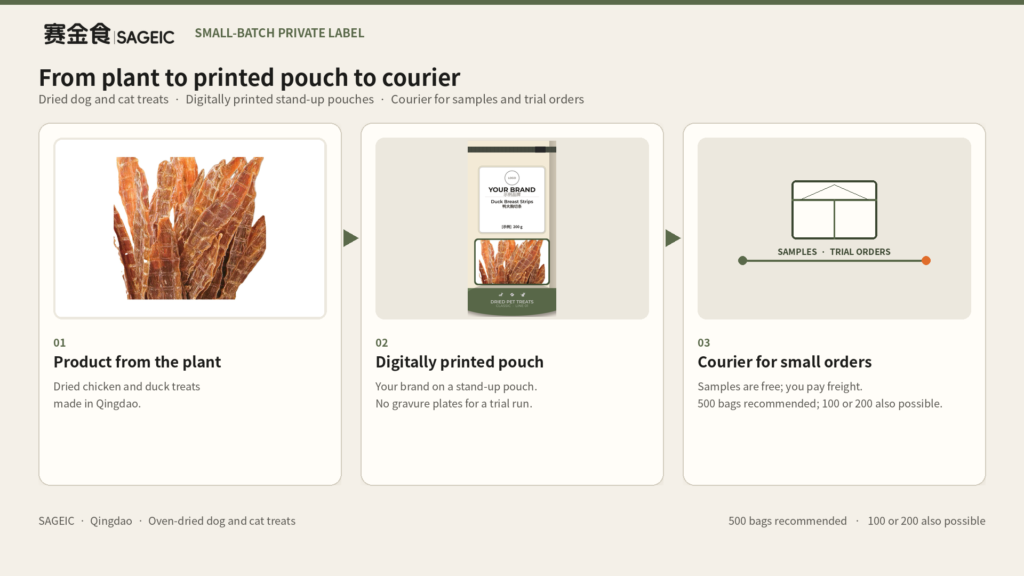
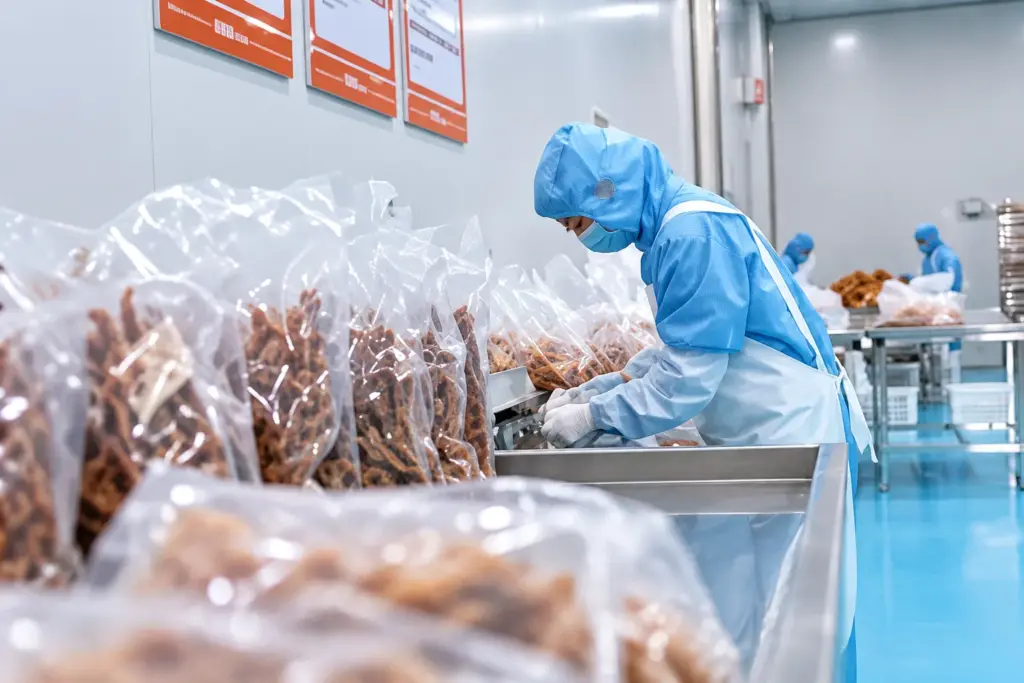
Nitrogen-flushed packaging replaces most of the air in the pouch with nitrogen before sealing, cutting the oxygen available for rancidity and for mold. An oxygen absorber sachet then mops up what is left and what slowly permeates through the film. Used together in a good barrier pouch, they are a standard way to support an 18-month shelf life. At our Qingdao plant, SAGEIC offers nitrogen flushing plus oxygen absorbers on stand-up pouches, zipper bags and PET jars, with an 18-month unopened shelf life on the standard range.
Two caveats: an oxygen absorber cannot fix a treat with too high water activity, and a zipper that is not fully closed after opening resets the clock.
Storage and Container Shipping Conditions
Most shelf-life problems that buyers see first-hand start in transit, not in the factory. A container crossing the equator can see large swings between hot days and cool nights. Moisture inside the container, from damp pallets, cartons or the cargo itself, condenses on the roof and drips back on the goods. Shippers call it “container rain.”
Practical controls to agree with your supplier and forwarder:
- Dry, heat-treated or plastic pallets and dry cartons at loading.
- Desiccant strips or bags hung in the container for long or tropical routes.
- Cartons that are not stacked against the container walls or doors.
- Prompt unloading at destination, and no long dwell in hot yards.
- Cool, dry warehouse storage away from direct sun after arrival.

Spec Sheet Table: What to Specify
Use this table as a checklist for moisture content, dog treat packaging and the other shelf-life factors. Set your limits from sampling and shelf-life testing on your actual recipe and pack.
| Factor | What it affects | What to specify |
|---|---|---|
| Moisture content | Texture, yield, label compliance | Maximum % (matching the guaranteed analysis), test method, sampling per lot |
| Water activity (aw) | Mold, yeast and bacterial growth | Maximum aw at a stated temperature, test frequency, who tests |
| Humectants | Softness, aw at a given moisture | Permitted humectants, food grade, maximum % in the recipe |
| Fat content and oxidation | Rancid odor, color, palatability | Crude fat range; peroxide value or sensory check for fatty recipes |
| Packaging barrier | Oxygen and moisture ingress, light exposure | Film structure (e.g., PE/PET or aluminum laminate), seal strength, zipper type |
| Residual oxygen | Rancidity, mold | Nitrogen flushing yes/no, oxygen absorber size, check method |
| Microbiology | Food safety, recalls | Pathogens tested (e.g., Salmonella), sampling plan, lab (in-house or third party) |
| Storage and transit | Condensation, heat damage | Storage temperature and humidity, container desiccants, pallet type |
| Shelf life and coding | Retail rotation, traceability | Unopened shelf life, after-opening guidance, lot code and date format |
Spec-Sheet Wording You Can Copy
Adapt these lines, replacing bracketed values with limits confirmed during sampling.
- “Moisture: ≤ [20.0]% by [oven-drying / moisture analyzer] method, tested on every production lot. Results recorded on the certificate of analysis.”
- “Water activity: ≤ [agreed value] at 25 °C, tested at [first production lot and every X lots], method and lab stated on the report.”
- “Humectants: food-grade glycerin and sorbitol only; combined content not to exceed [X]% of the formula.”
- “Packaging: [aluminum-laminated / PE/PET] stand-up pouch with zipper, nitrogen-flushed, with one oxygen absorber of [size] per pouch. Seal integrity checked on [frequency].”
- “Shelf life: 18 months unopened from production date, stored cool and dry. After opening, reseal and use within [30] days.”
- “Microbiology: Salmonella not detected per [sample size] on each lot; third-party verification on [first lot / annually / on request].”
Salmonella is the pathogen most often written into treat specs because FDA has a specific compliance policy on Salmonella in food for animals, including pet food; see the FDA compliance policy guide on Salmonella in food for animals and confirm current requirements for your market.
Testing: How Shelf Life Is Verified
A credible shelf-life claim rests on two kinds of evidence: routine lot testing and a shelf-life study.
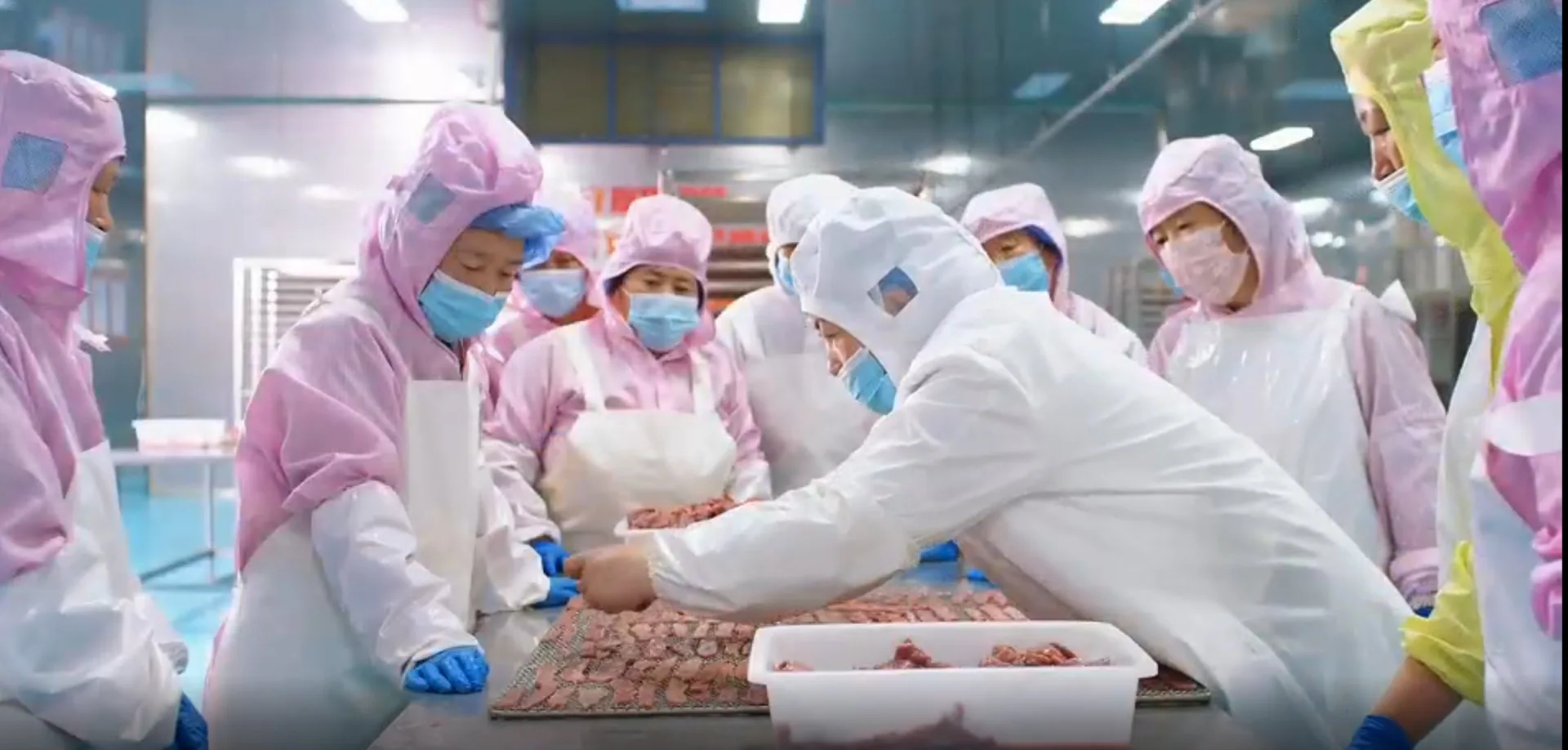
- Lot testing. Moisture on every lot is standard. SAGEIC runs an in-house lab for moisture, protein, fat and microbiology, and can arrange third-party testing through SGS or Intertek on request, for example for water activity or pathogen verification.
- Shelf-life study. Store packed product under defined conditions and test at intervals for moisture, aw, microbiology, odor, color and texture. Real-time studies are the reference; accelerated studies give earlier but less certain signals.
For a wider view of how to judge a supplier’s lab and food safety system, see our quality page and the guide on how to choose a dog treat manufacturer in China.
Retail Shelf Life and After-Opening Guidance
Retailers usually want a minimum remaining shelf life on delivery, so plan production and shipping around it. An 18-month product that spends two months in transit and a month in your warehouse already has 15 months left at best.
After opening, the pack is no longer flushed and the absorber is quickly saturated. Clear consumer guidance on the label helps: reseal tightly, store in a cool and dry place, and use within the stated period. In our catalog that period is typically 30 days for meat treats, 40 days for biscuits and 60 days for rawhide rings, and some soft treats carry an instruction to refrigerate after opening. If you see the same pattern of complaints on dog treat shelf life after opening, the fix is often a better zipper or a smaller pack size, not a recipe change.
More buyer questions are answered on our FAQ page.
FAQ
How long do dried dog treats last after opening?
Most dried meat dog treats should be used within about 30 days of opening, provided the bag is resealed and kept cool and dry. Harder products such as biscuits or rawhide can last longer, often 40 to 60 days. Always follow the after-opening guidance printed on the specific product, because humectant level and moisture vary between recipes.
What is a good water activity for dog treats?
There is no single correct value, but lower is safer for microbial stability. US human-food jerky guidance commonly uses 0.85 or below as a shelf-stability benchmark, and many treat brands set a tighter internal target to build a margin against mold. Confirm your limit with shelf-life testing on your own recipe and packaging.
What is the difference between moisture content and water activity?
Moisture content is the total amount of water in a treat, while water activity measures how much of that water is free for microbes to use. Humectants, salts and sugars bind water, so two treats with the same moisture percentage can have different water activity and different spoilage risk. A good spec sheet includes both.
Does nitrogen flushing extend dog treat shelf life?
Yes, nitrogen flushing helps extend shelf life by removing most oxygen from the pack, which slows fat oxidation and mold growth. It works best in a high-barrier pouch with an oxygen absorber and intact seals. It cannot compensate for a treat that was packed with too much moisture or too high water activity.
Why do dog treats get moldy in shipping containers?
Dog treats usually get moldy in containers because of condensation, often called container rain, combined with packaging damage or treats packed too moist. Temperature swings make moisture from pallets and cartons condense and drip onto goods. Dry pallets, container desiccants, intact pouches and correct water activity at packing reduce the risk.
Are glycerin and sorbitol safe in dog treats?
Food-grade glycerin and sorbitol are commonly used humectants in soft dog treats and are listed openly in many commercial ingredient statements. They keep meat pliable and help control water activity. Use the declared percentage in your spec, follow your market’s labeling rules, and check that your ingredient claims match the recipe.
What should a dog treat spec sheet include for shelf life?
A dog treat spec sheet should state maximum moisture, a water activity limit, permitted humectants, packaging structure, nitrogen flushing and oxygen absorber use, microbiological limits, storage conditions and the unopened and after-opening shelf life. Each item should name a test method, frequency and who carries out the test.
Need treats that arrive the way they left the factory?
Send us your product brief and target market. We’ll share real spec sheets with moisture limits, packaging options with nitrogen flushing and oxygen absorbers, and an 18-month shelf-life plan for your range. Email sales@sageicpet.com or WhatsApp +86 17669606473.