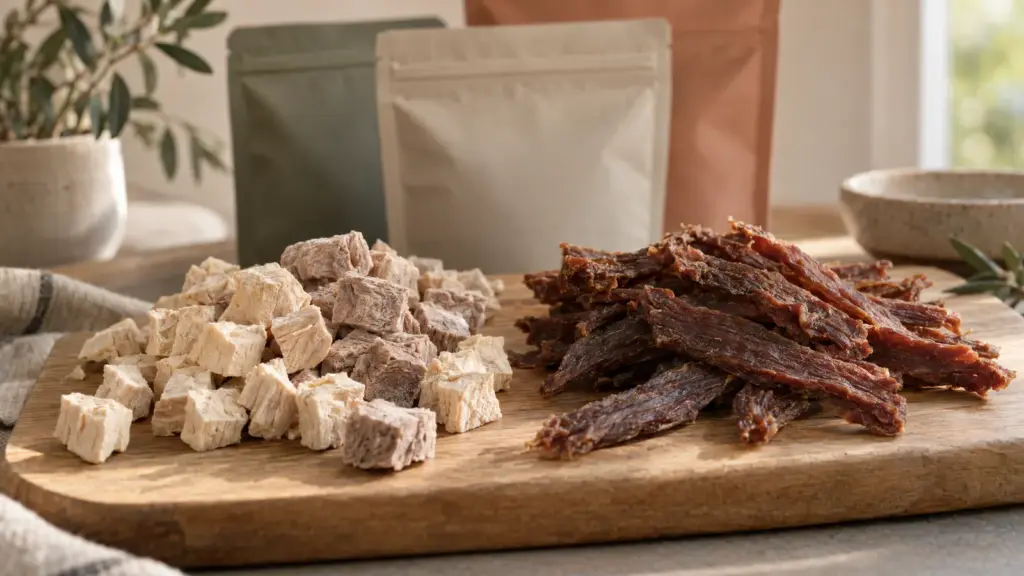
The main difference in freeze-dried vs air-dried dog treats is how the water comes out: freeze-drying removes ice under vacuum and leaves a light, porous, near-raw piece, while air-drying uses warm moving air and gives a denser, chewier treat. Freeze-dried treats usually cost more per kilogram and need tighter moisture-barrier packaging; air-dried and baked treats are cheaper to run at scale and travel well. The right choice depends on your channel, price point and positioning, not on which process is “better.”
Key takeaways
- Four dog treat drying methods dominate dried meat treats: freeze-drying, low-temperature air-drying, oven baking and cold-forming followed by drying.
- Freeze-dried treats are light, crumbly and very low in moisture; air-dried treats are chewy and dense; baked treats are firm or crunchy; cold-formed treats allow shapes and inclusions.
- Freeze-drying has the highest cost drivers: long vacuum cycles, energy use and high-barrier packaging.
- Raw freeze-dried products carry specific pathogen-control questions; ask every supplier where the kill step is.
- Write moisture range, texture, piece size, pack format and shelf-life target into your product brief for each process.
In this guide
Why the Drying Method Matters to Buyers
For a dried meat treat, the drying step decides almost everything a buyer cares about: how the piece looks in the bag, how it breaks in transit, how long it stays stable, what the dog thinks of it and what it costs per kilogram. Two treats made from the same duck breast can end up in different price tiers and different aisles purely because of how the water was removed.
That is why the freeze-dried vs air-dried dog treats question shows up in so many sourcing briefs: both words appear on the front of the pack as positioning claims, not just process notes.
How the Four Dog Treat Drying Methods Work
Freeze-drying
Meat is cut, frozen solid and placed in a vacuum chamber. Under low pressure, gentle heat makes the ice turn directly into vapor (sublimation) without passing through a liquid stage. Because the water leaves as vapor from a frozen structure, the piece keeps roughly its original size and shape, with a porous, sponge-like interior. Cycles are long, commonly a day or more depending on piece thickness and equipment, and the chamber holds a fixed batch.
Low-temperature air-drying
Sliced or shaped meat goes onto trays or mesh belts, and warm, controlled air moves across it for many hours. Water evaporates from the surface and migrates out from the center, so the piece shrinks and becomes dense and pliable. Air-dried dog treats such as jerky, fillets and wrapped sticks anchor most dried treat ranges because the process is scalable and forgiving of different cuts.
Oven baking
Baking uses higher, often radiant or convection heat to cook and dry a dough or meat piece in a shorter time. Baked dog treats such as biscuits, crunchy balls and some shaped bites get a firm or crisp texture, a browned surface and a cooked aroma. Many products combine both: a short bake to set shape and cook through, then a lower-temperature drying stage to reach target moisture.
Cold-forming
Cold-forming is a shaping method rather than a drying method. Ground or minced meat, sometimes blended with vegetables, egg, fruit or a binder, is pressed, molded or extruded at low temperature into rolls, rings, sticks or bites, then dried or baked. It lets you control shape, size and inclusions precisely, and it uses raw material that would not suit whole-muscle jerky. Most cold-formed treats end up with a texture between air-dried and baked.
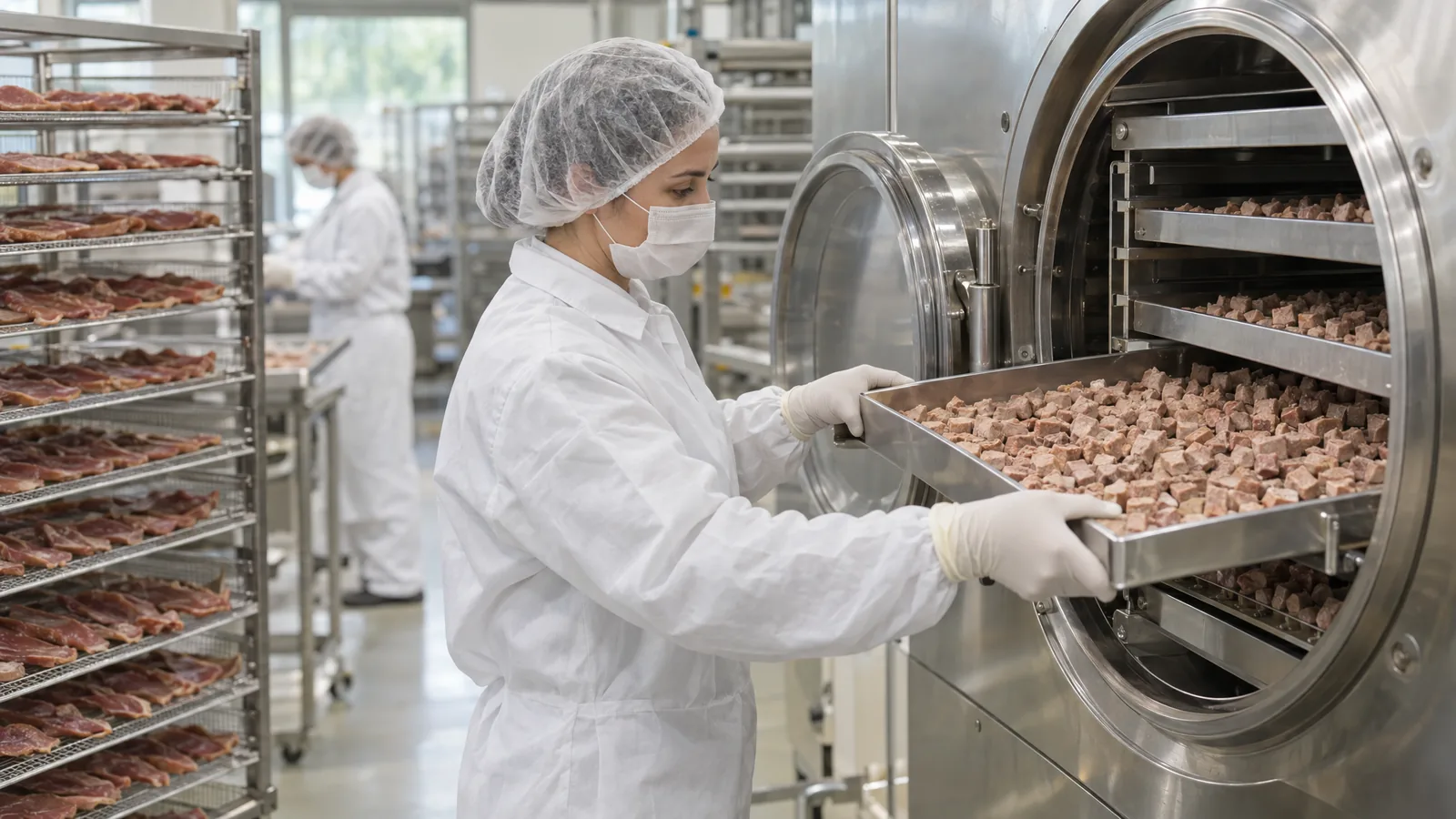
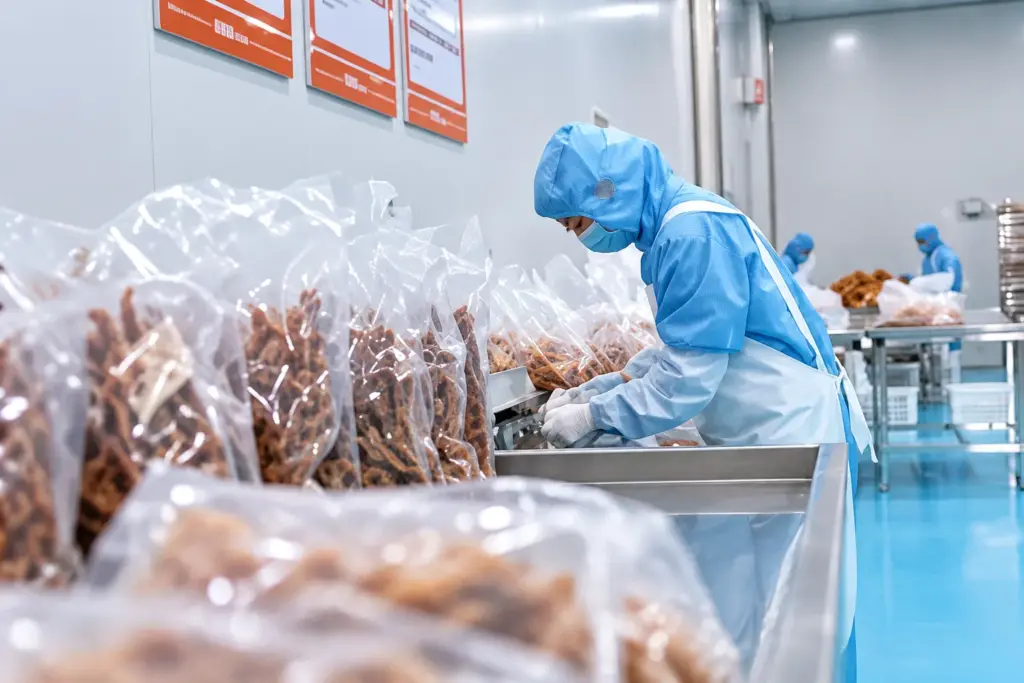
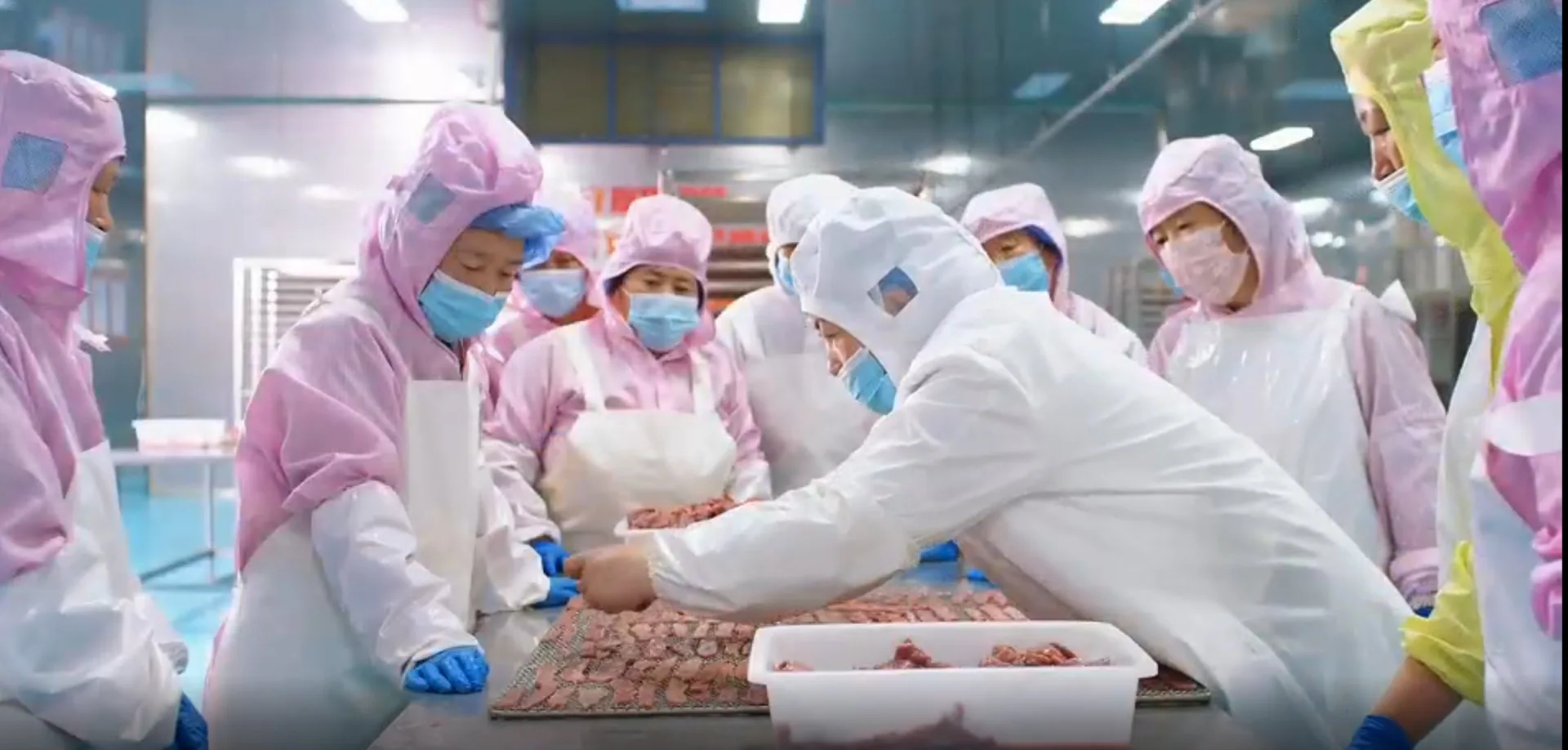
At our Qingdao plant we run low-temperature air-drying and baking lines alongside freeze-dried and cold-formed production, so we see the trade-offs between processes on the same proteins every week.
Freeze-Dried vs Air-Dried Dog Treats: 5 Differences Buyers Should Know
Most buyer decisions come down to five practical differences; baked and cold-formed treats appear where they offer a middle option.
1. Texture and piece integrity
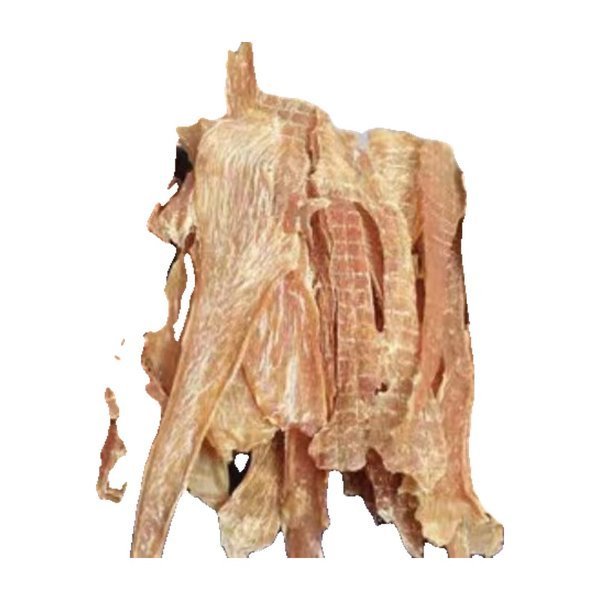
Freeze-dried treats are light, airy and crumble easily between the fingers. Dogs and cats can eat them without much chewing, which suits toppers, training and small mouths, but the pieces generate dust and fines in transit. Air-dried treats are chewy and pliable, take longer to eat and hold together through shipping. Baked treats are firm or crunchy; cold-formed treats can be tuned from soft-chewy to firm depending on recipe and drying time.
For buyers, the practical question is breakage. Ask for the supplier’s typical percentage of broken pieces and fines at destination, and agree on a limit in the spec.
2. Moisture and water activity
Freeze-dried products usually finish at very low moisture, often in the single digits as a typical industry range. Air-dried meat treats are commonly higher; for example, our Whole Duck Fillet carries a guaranteed analysis of moisture ≤ 20.0%. Baked biscuits sit lower, such as our Goat Milk Biscuit Rings at moisture ≤ 12.0%.
Water activity, which measures how much water is free to support microbial growth, matters as much as moisture. Ask suppliers for both figures per lot.
3. Shelf life and packaging needs
Very dry, porous freeze-dried pieces pull moisture from the air quickly once the bag is open, and they oxidize if oxygen gets in. They need high-barrier film, a reliable zipper and usually an oxygen absorber or nitrogen flush. Air-dried and baked treats are less sensitive to humidity pick-up but still benefit from the same protection, because fat oxidation causes off-odors and color change over time.
Shelf life depends on recipe, moisture, water activity and packaging, so treat any figure as product-specific. For our dried treats packed with nitrogen flushing and an oxygen absorber, the standard shelf life is 18 months.
4. Palatability and positioning
Freeze-drying keeps much of the raw material’s original aroma and appearance, which is why freeze-dried treats are popular in premium and “raw-inspired” positioning, and as food toppers. Air-dried treats have a concentrated meat flavor and a chew that dogs work at, which suits reward and chew-time positioning. Baked treats bring a cooked, roasted aroma that many dogs find attractive and that consumers associate with familiar biscuits.
5. Cost drivers
Freeze-drying is typically the most expensive of the four processes per kilogram of finished product. The main drivers are long batch cycles, high energy use for freezing and vacuum, capital cost of the equipment and the stronger packaging it needs. Air-drying and baking run continuously or in large batches, so the cost per kilogram is usually lower.
Across all methods, raw meat remains the largest cost line, because several kilograms of raw meat go into each kilogram of finished dried meat. Our article on private label dog treat MOQ and cost breaks these variables down.
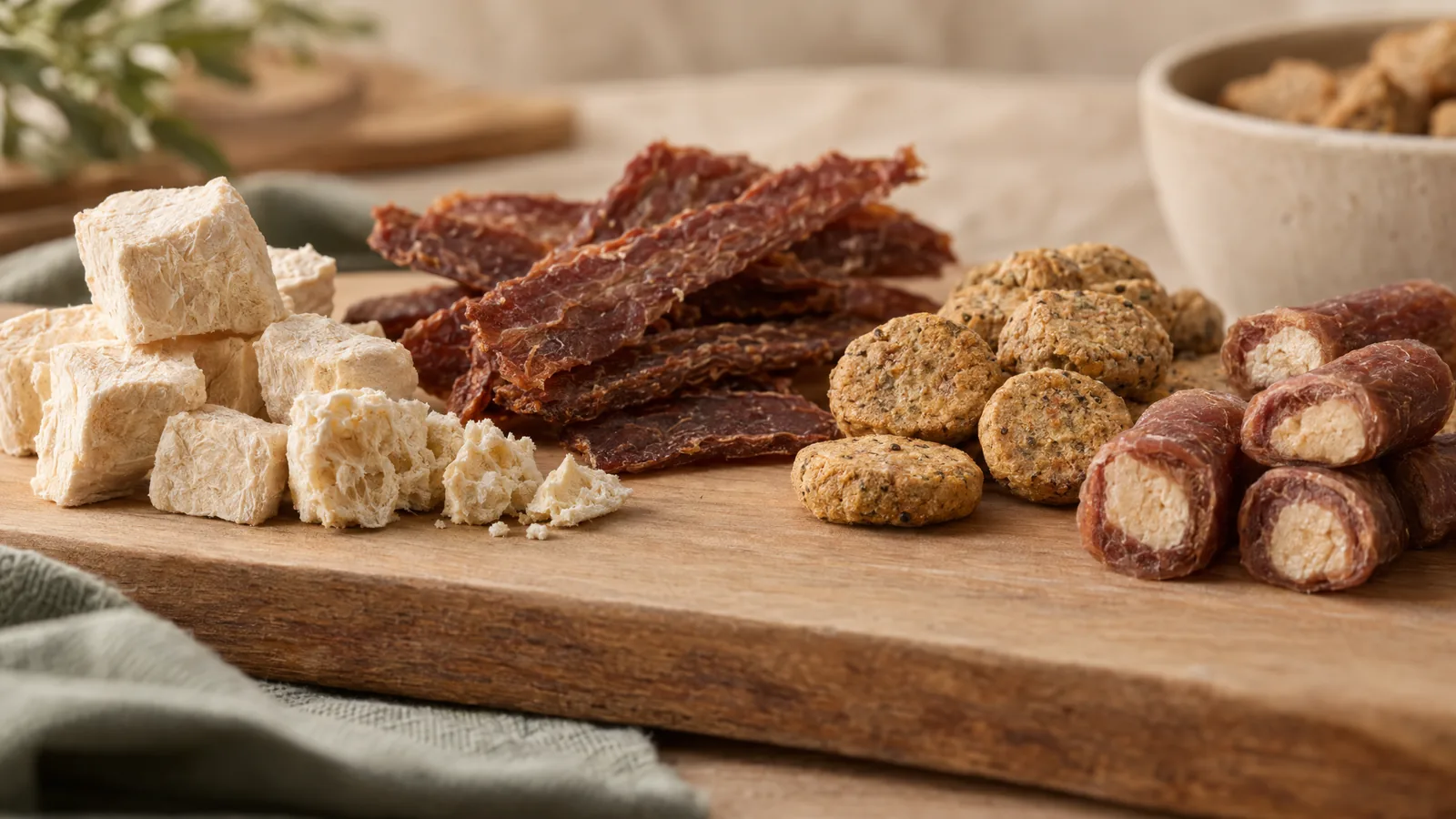
Side-by-Side Comparison of Dog Treat Drying Methods
The table summarizes typical characteristics. Ranges are general industry patterns, not specifications for any single product.
| Process | Texture | Moisture (typical) | Shelf life drivers | Relative cost | Best for |
|---|---|---|---|---|---|
| Freeze-dried | Light, porous, crumbly | Very low, often single digits | Highly sensitive to humidity and oxygen once opened; needs high-barrier pack | Highest | Premium single-protein treats, toppers, cat treats, high-value training bites |
| Low-temperature air-dried | Dense, chewy, pliable | Moderate; many meat treats around the high teens to low 20s % | Stable with good packaging; watch fat oxidation | Medium | Jerky, fillets, wrapped treats, everyday rewards |
| Oven baked | Firm to crunchy | Low to moderate | Generally robust; fat level drives rancidity risk | Low to medium | Biscuits, crunchy bites, value and multi-pack lines |
| Cold-formed, then dried | Adjustable, soft-chewy to firm | Depends on recipe and drying stage | Depends on recipe, binders and water activity | Medium | Rolls, rings, shaped bites, recipes with vegetable or fruit inclusions |
Which Format Suits Which Retail Channel
Channel economics often decide the format before the product team does. A few patterns hold across most markets:
- Pet specialty and premium independents. Freeze-dried single-protein treats and toppers fit well, because shoppers accept a higher price per ounce for a “minimally processed” story.
- Grocery and mass retail. Air-dried jerky and baked dog treats dominate, since they hold a lower price per pack, survive warehouse handling and have a familiar look.
- E-commerce and subscription. All formats work, but breakage matters more in parcel shipping. Freeze-dried pieces need sturdier packs or rigid PET jars; air-dried treats travel well in pouches.
- Training-focused lines. Small freeze-dried cubes or thin slices break easily into rewards; soft cold-formed bites are another option.
Many brands combine processes in one range: an air-dried hero SKU for volume, a freeze-dried SKU for margin and positioning, and a baked or cold-formed product to fill the entry price point. For freeze-dried dog treats wholesale programs, ask the factory about chamber capacity early, because batch size limits how quickly a reorder can be produced.
How to Specify Each Process in a Product Brief
A clear brief prevents samples that look right but behave wrong on shelf. For each SKU, state:
- Process. Freeze-dried, air-dried, baked or cold-formed then dried, and whether the meat is raw or cooked before freeze-drying.
- Texture target. Crumbly, pliable, chewy, firm or crunchy, with a reference product if you have one.
- Moisture and water activity range. Ask the supplier to propose a range from their validated recipes, then lock it in the spec.
- Piece size and shape. Dimensions, weight per piece and acceptable breakage or fines.
- Guaranteed analysis. Minimum protein and fat, maximum fiber and moisture, aligned with your label.
- Packaging. Pouch, zipper bag, PET jar or display box; film barrier level; nitrogen flush and oxygen absorber.
- Shelf-life target. The claim you need on pack and how the supplier will support it.
- Testing. In-house tests per lot and any third-party testing you require.
On labeling, treats in the US are usually labeled for intermittent or supplemental feeding, and AAFCO outlines the required label items. Always check the latest official requirements for your market.
Food Safety: Ask Where the Kill Step Is
Freeze-drying removes water but is not, on its own, a reliable way to kill pathogens. The FDA has repeatedly warned that raw pet foods, including freeze-dried raw products, can carry Salmonella and Listeria. If you plan a raw freeze-dried line, ask the supplier which validated step controls pathogens, such as cooking before freeze-drying or another validated treatment, and what microbiological testing is done per lot.
Air-dried, baked and cold-formed treats rely on time and temperature control during drying. Ask to see the HACCP critical control points and drying records for a sample lot. At SAGEIC our in-house lab tests moisture, protein, fat and microbiology, and third-party testing through SGS or Intertek is available on request.
Choosing Between Freeze-Dried and Air-Dried Dog Treats
If your brand story is premium, minimally processed and topper-friendly, and your channel accepts a higher price per ounce, freeze-dried is worth the extra cost and packaging care. If you need volume, durability in transit and a familiar chew at a mainstream price, air-dried dog treats are the safer starting point, with baked and cold-formed products filling the gaps. Most buyers comparing freeze-dried vs air-dried dog treats end up running both, each in the channel where it earns its margin.
If you want to develop a mixed range, our OEM and ODM service covers formula, process and packaging in one project, and answers to common sourcing questions are on our buyer FAQ page.
FAQ
Are freeze-dried dog treats better than air-dried dog treats?
Neither is better in every case; they suit different products and channels. Freeze-dried treats keep more of the raw material’s look and aroma and are very light, which suits premium toppers and training. Air-dried treats are denser, chewier, cheaper per kilogram and more durable in transit, which suits everyday rewards and mainstream retail. Choose by positioning, price point and packaging budget.
Why do freeze-dried dog treats cost more than air-dried treats?
Freeze-dried treats cost more mainly because the process is slower and more energy-intensive. Each vacuum batch runs for many hours, often a day or more, and the equipment is expensive. Freeze-dried pieces also need high-barrier packaging and oxygen protection. Raw meat is still the largest cost line, but these process and packaging costs add a premium per kilogram.
What is the typical moisture content of air-dried dog treats?
Air-dried meat treats usually have moderate moisture, commonly in the high teens to low 20s percent, depending on recipe and texture. For example, guaranteed analyses for many whole-muscle duck and chicken treats show moisture at or below 20–22%. Freeze-dried products are typically much drier. Always confirm the range for each SKU on the spec sheet and check water activity as well.
Do freeze-dried dog treats need special packaging?
Yes, freeze-dried treats generally need stronger moisture and oxygen protection than air-dried treats. Their porous, very dry structure absorbs humidity quickly once exposed, which softens texture and shortens shelf life. High-barrier pouches or PET jars, a reliable reclosable zipper and nitrogen flushing or an oxygen absorber are common choices. Test the chosen pack with real shipping conditions before launch.
Is freeze-drying enough to make raw dog treats safe?
No, freeze-drying alone is not considered a reliable pathogen kill step. It removes water but does not consistently destroy bacteria such as Salmonella or Listeria. Suppliers of raw freeze-dried products should use a validated control step, such as cooking before freeze-drying or another validated treatment, and test finished lots for microbiology. Ask to see the HACCP plan and lab results.
What are cold-formed dog treats?
Cold-formed dog treats are made by pressing, molding or extruding ground meat, often blended with ingredients such as vegetables, egg or fruit, at low temperature into a shape, then drying or baking it. The method gives precise control of shape, size and inclusions. Texture can be tuned from soft-chewy to firm, so it suits rolls, rings and training bites.
Can one manufacturer make freeze-dried, air-dried and baked dog treats?
Yes, some manufacturers run several dog treat drying methods under one roof, which simplifies building a mixed range. Ask how much capacity each line has, especially freeze-drying, which is batch-limited. Also check that the food safety certificates’ scope covers the processes and products you plan to buy, since a certificate may only cover specific lines.
Planning a freeze-dried or air-dried treat line?
Tell us your protein, target texture, channel and price point. We’ll recommend the right drying process, propose a moisture and packaging spec and ship samples in 2–3 weeks, with no minimum order quantity. Email sales@sageicpet.com or WhatsApp +86 17669606473.