Rabbit ears are a distinctive addition to a natural chew range: they are easy for shoppers to understand, visually different from standard jerky, and available in several formats for different product positions. For buyers searching for rabbit ear dog treats wholesale, the key decision is not simply whether to stock rabbit ears. It is whether the range should use fur-on ears, fur-free ears, or poultry-wrapped ears—and how each format will be specified, sampled, packed and labelled.
SAGEIC manufactures dried pet treats in Qingdao for export and private label programmes. Our current Natural Series includes four rabbit-ear formats: Chicken-Wrapped Rabbit Ears SJS0018W, Duck-Wrapped Rabbit Ears SJS0019W, Fur-Free Rabbit Ears SJS0020W and Fur-On Rabbit Ears SJS0021W. This buyer’s guide compares those options using the specifications shown in our current catalogue and explains what importers should confirm before placing an order.
Why rabbit ears deserve their own buying brief
Rabbit ears are not a uniform commodity. Two samples can carry the same general product name but differ noticeably in size, surface appearance, remaining fur, poultry coverage, dryness and breakage. Those differences affect the retail story, packing efficiency and customer expectations.
A useful wholesale brief should therefore define:
- Format. Fur-on, fur-free, chicken-wrapped or duck-wrapped.
- Target pet. Our wrapped formats are listed for dogs and cats; our fur-on and fur-free formats are listed for dogs.
- Visual tolerance. Natural ears vary. Agree acceptable size, colour, shape and breakage before production.
- Guaranteed analysis. Confirm the protein and moisture limits for the exact SKU rather than applying one specification to the whole category.
- Pack format. Long, irregular chews require enough headspace and suitable film so ears are not crushed during sealing and transport.
Rabbit is often marketed as an alternative protein, but that positioning should not become a medical promise. Avoid allergy-treatment or disease claims unless the wording has been reviewed for the destination market.
Four rabbit ear formats in the SAGEIC range
The table below compares the current catalogue values. Ask for the latest specification and certificate of analysis when confirming a production lot.
| SKU | Product | Suitable for | Crude protein | Moisture |
|---|---|---|---|---|
| SJS0018W | Chicken-Wrapped Rabbit Ears | Dogs and cats | ≥45.0% | ≤16.0% |
| SJS0019W | Duck-Wrapped Rabbit Ears | Dogs and cats | ≥43.0% | ≤16.0% |
| SJS0020W | Fur-Free Rabbit Ears | Dogs | ≥50.0% | ≤16.0% |
| SJS0021W | Fur-On Rabbit Ears | Dogs | ≥48.0% | ≤16.0% |
Chicken-Wrapped Rabbit Ears SJS0018W

SJS0018W combines a recognisable rabbit-ear base with a chicken wrap. It is listed for dogs and cats, with crude protein ≥45.0% and moisture ≤16.0%. This format works for buyers who already sell chicken treats and want a visually different chew without moving away from a familiar protein story. See the SJS0018W product page.
For the sample approval, define how much of the ear should be covered, how firmly the chicken layer should adhere and how much exposed ear is acceptable. Coverage should be judged against a retained golden sample, not only a written percentage.
Duck-Wrapped Rabbit Ears SJS0019W

SJS0019W uses a duck wrap and is also listed for dogs and cats. Its catalogue values are crude protein ≥43.0% and moisture ≤16.0%. It fits naturally into a duck-led assortment and can sit beside whole duck tenderloins, slices or other wrapped formats. See the SJS0019W product page and our duck dog treats wholesale guide.
Duck and chicken wraps should be treated as separate SKUs in the specification, artwork and allergen review. Do not reuse an ingredient panel or guaranteed analysis between them without checking the approved formula.
Fur-Free Rabbit Ears SJS0020W
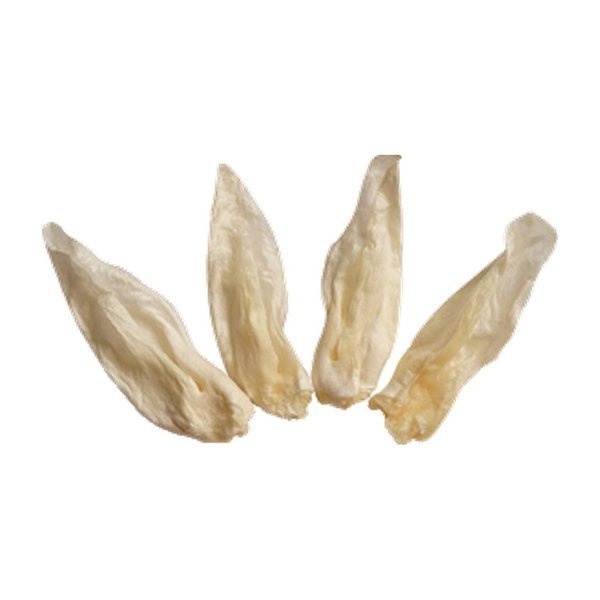
SJS0020W is the simplest-looking format in the group. It is listed for dogs, with crude protein ≥50.0% and moisture ≤16.0%. Fur-free ears suit brands that want a natural chew but prefer a cleaner visual presentation in a transparent or windowed pouch. See the SJS0020W product page.
During sampling, inspect the surface carefully. Agree how much residual hair, skin variation and edge damage is acceptable. Natural colour variation is normal, but scorched areas, tacky surfaces and unusual odours should be rejected.
Fur-On Rabbit Ears SJS0021W

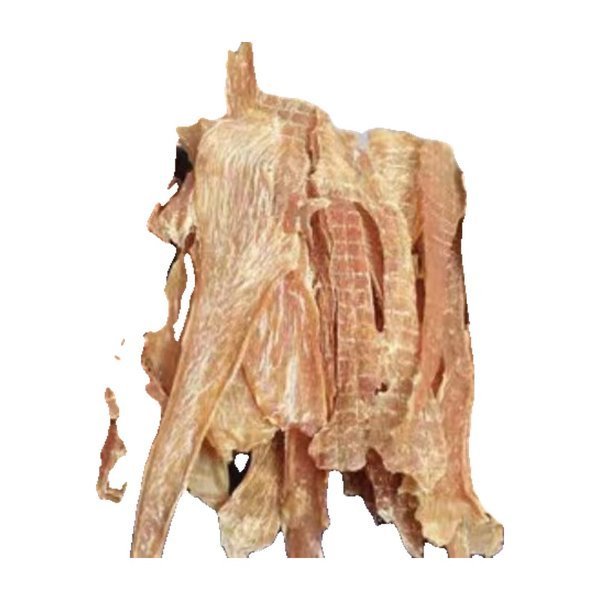
SJS0021W retains the fur and is listed for dogs. Its catalogue values are crude protein ≥48.0% and moisture ≤16.0%. This is the most visually natural format and should be presented clearly on the front of pack so shoppers know what they are buying. See the SJS0021W product page.
Because appearance is part of the product proposition, approve actual pieces rather than relying on a close-up photograph. Fur coverage, ear length and shape will vary within a natural lot. Your golden sample and written tolerance should reflect a realistic range.
Fur-on vs fur-free vs poultry-wrapped: how to choose
| Buying goal | Best starting format | What to control |
|---|---|---|
| Natural, visibly minimally processed chew | Fur-On SJS0021W | Fur coverage, size range, dryness and pack presentation |
| Clean visual presentation | Fur-Free SJS0020W | Residual hair tolerance, surface condition and breakage |
| Familiar chicken-led range | Chicken-Wrapped SJS0018W | Wrap coverage, adhesion and formula-specific label |
| Premium duck-led range | Duck-Wrapped SJS0019W | Wrap coverage, adhesion and formula-specific label |
Some brands launch two formats together: one unwrapped ear as the natural option and one poultry-wrapped ear as the more familiar option. If shelf space is limited, start with the format that best matches the rest of the assortment. Our wrapped dog treats buyer’s guide explains how to compare wrapped formats by core, coverage and quality points.
What importers should specify before ordering
A practical rabbit-ear specification should go beyond the SKU name. Include these fields in the purchase specification or approved sample record:
- SKU and approved name. State the exact SAGEIC code and the name that will appear on your pack.
- Target size range. Agree a realistic length and weight range based on the approved sample lot.
- Appearance tolerance. Define acceptable colour, fur coverage or residual hair, wrap coverage, exposed ear and edge damage.
- Texture and dryness. The ear should feel dry rather than tacky. Confirm the catalogue moisture maximum of ≤16.0% and request the lot result.
- Breakage limit. Decide whether broken pieces may remain in retail packs or should be removed during sorting.
- Microbiology panel. Align test requirements with the destination market and your own supplier-approval programme.
- Pack count or net weight. Natural size variation makes this choice important. Specify how count and weight tolerances will be handled.
- Carton protection. Confirm pouch layout, inner packing and carton strength for long, irregular chews.
Keep one sealed approved golden sample and record the lot number. When production arrives, compare colour, odour, dryness, size distribution and wrap coverage with that reference. Our dog treat samples guide provides a complete sampling and approval workflow.
Packaging rabbit ears for wholesale and private label
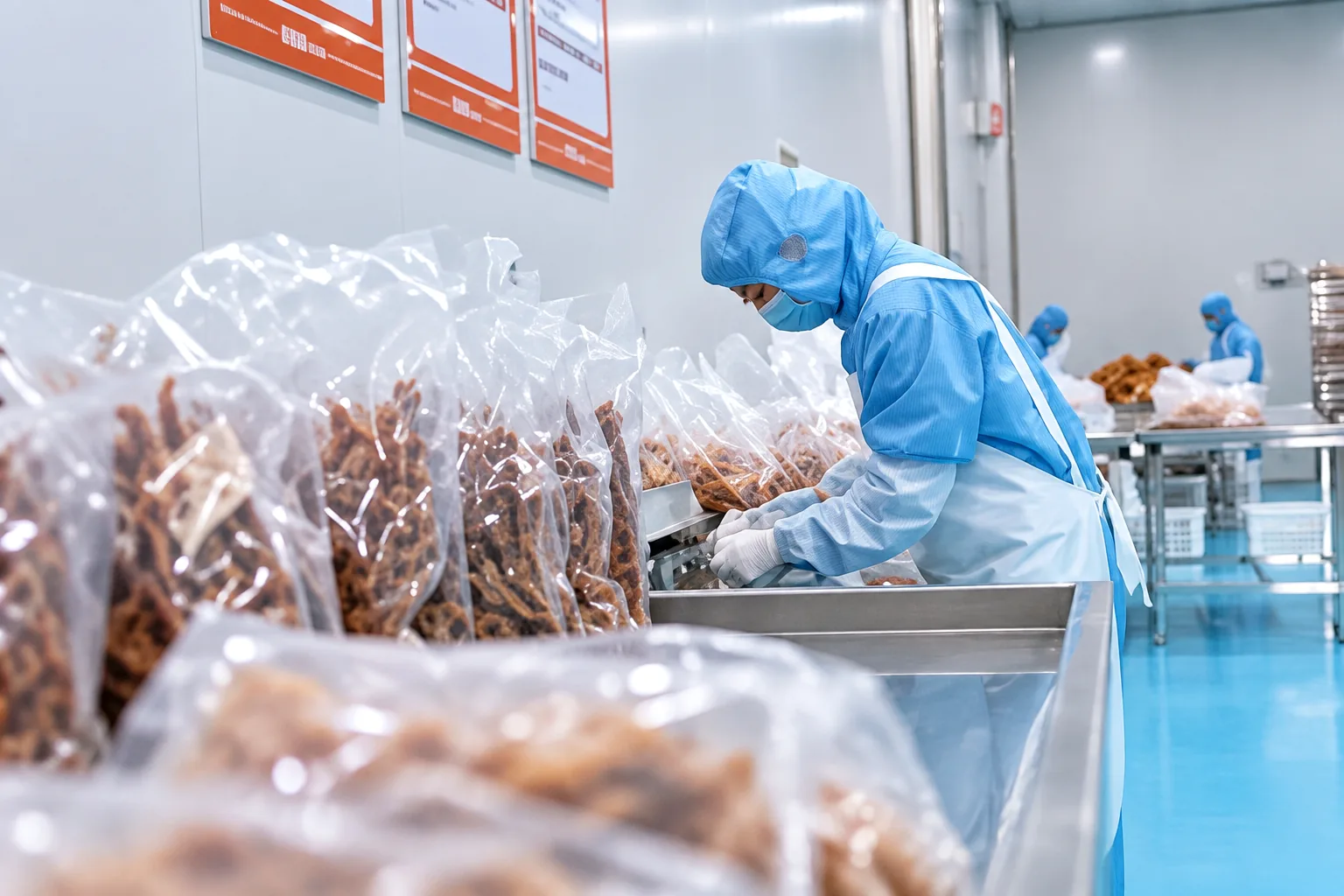
Rabbit ears are light but bulky, so packaging must be tested with real product rather than chosen from net weight alone. A pouch that works for dense jerky may be too narrow for ears and may create excessive breakage at the seal.
Before approving artwork and film, confirm:
- Stand-up pouch, flat pouch, PET jar or bulk carton format.
- Pack dimensions with the largest approved ears inside.
- Net weight, approximate count and whether count will vary naturally.
- Barrier performance, seal width and zipper position.
- Window size, especially for fur-on products where appearance drives the purchase.
- Lot code and best-before printing position.
- Outer-carton layout to limit crushing in international transport.
SAGEIC provides bulk and private label packaging to the customer’s specification. There is no minimum order quantity, so buyers can combine several recipes and pack sizes for a trial order. Samples typically take 2–3 weeks after the product brief is confirmed. Unit pricing depends on the selected SKU, packaging, volume and destination.
For the full private label workflow—from brief and samples to artwork, production and shipping—see our private label dog treats guide and OEM & ODM service page.
Quality checks for a rabbit ear production lot
Rabbit ears should be checked as a natural chew, not as a perfectly uniform moulded snack. The goal is controlled variation within an agreed range.
- Odour: clean and characteristic of the dried ingredients, without sour, rancid or ammonia notes.
- Surface: dry, with no visible mould, foreign material or tacky areas.
- Colour: within the approved natural range, without extensive scorching.
- Fur or hair: consistent with the approved fur-on or fur-free specification.
- Wrap: securely attached and within the agreed coverage range for SJS0018W and SJS0019W.
- Size distribution: representative of the approved sample and suitable for the retail pouch.
- Breakage: measured after packing and carton handling, not only before the line.
- COA: checked against the SKU’s protein and moisture limits and the required microbiology panel.
Moisture is only one part of shelf-life control. Film barrier, seal integrity, fat oxidation and shipping conditions also matter. Read our guide to dog treat shelf life, moisture and packaging before finalising the pack.
Rabbit ear dog treats wholesale FAQ
Which SAGEIC rabbit ear formats are available?
Our current Natural Series includes Chicken-Wrapped Rabbit Ears SJS0018W, Duck-Wrapped Rabbit Ears SJS0019W, Fur-Free Rabbit Ears SJS0020W and Fur-On Rabbit Ears SJS0021W.
Are rabbit ear treats suitable for cats?
SJS0018W and SJS0019W are listed for dogs and cats. SJS0020W and SJS0021W are listed for dogs. Always match the label and feeding directions to the approved product specification and destination market.
What are the protein and moisture specifications?
Catalogue crude protein minimums are 45.0% for SJS0018W, 43.0% for SJS0019W, 50.0% for SJS0020W and 48.0% for SJS0021W. All four list moisture at no more than 16.0%. Ask for the current specification and lot COA when ordering.
Do you offer private label packaging?
Yes. Packaging can be supplied to your specification, including retail-ready pouches and bulk cartons. Test pouch dimensions with actual ears because the products are light, long and naturally variable.
Is there a minimum order quantity?
There is no minimum order quantity. You can combine several recipes or pack sizes in a trial order. Pricing depends on product format, packaging, volume and shipping destination.
How should we approve a rabbit ear sample?
Check odour, dryness, colour, size distribution, fur or residual hair, breakage and—on wrapped products—coverage and adhesion. Approve and retain a sealed golden sample with its lot number before production.
Build a rabbit ear range with SAGEIC
Send us your target market, pet type, preferred format, pack dimensions and expected monthly volume. We will map the brief to SJS0018W, SJS0019W, SJS0020W or SJS0021W, arrange samples and quote the selected bulk or private label pack.
Email: sales@sageicpet.com
WhatsApp: +86 176 6960 6473
Browse the range: SAGEIC wholesale dog and cat treats