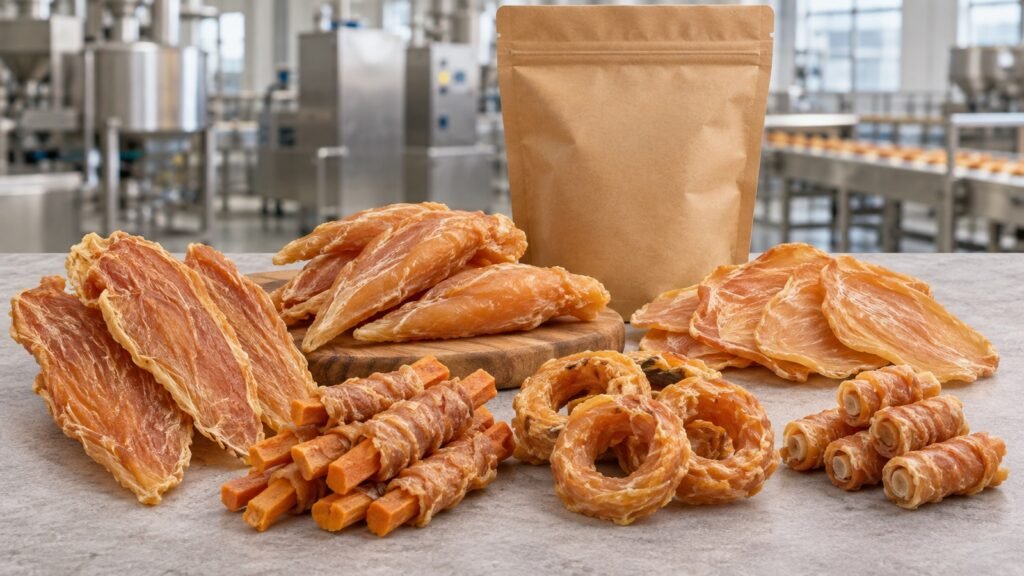
Buying chicken dog treats wholesale is not just a question of choosing jerky and asking for a price. The format, meat percentage, piece size, moisture, packaging and market-specific label all change the product your customer sees and the cost you pay. A useful supplier brief starts with the retail job each SKU must do, then turns that job into measurable specifications. This guide compares seven chicken treat formats, the quality checks to write into your spec, and the fastest route from samples to a private label launch.
Key takeaways
- Build a range around a clear role for each SKU: premium jerky, everyday reward, training piece, longer chew or dog-and-cat crossover.
- Specify protein source, ingredient percentages, piece dimensions, texture, moisture, water activity, microbiology and breakage limits in writing.
- Whole-muscle jerky tells the simplest premium story; wrapped, sliced and shaped treats create more variety and price points.
- Approve a sealed golden sample, not a photograph, and compare every first production lot against it.
- Packaging is part of the product: match pack size, barrier, zipper, nitrogen flushing and oxygen absorber to the recipe and sales channel.
- For private label chicken dog treats, check certificate scope, batch traceability and export experience before comparing unit prices.
In this guide
Why Chicken Is a Core Wholesale Dog Treat Protein
Chicken works across more formats than almost any other treat protein. Breast meat can be dried as a whole tenderloin, sliced into jerky, wrapped around a vegetable or chew core, minced into shaped pieces, or blended into a soft sausage-style treat. That lets a brand build several price points and textures around one familiar protein.
For buyers, the advantage is operational as well as commercial. One chicken-led range can serve premium pet shops, grocery, e-commerce and subscription boxes without every SKU needing a completely different production process. The risk is that similar-looking products can have very different formulas. A whole-muscle fillet, a 60% chicken wrapped treat and a formed slice are not interchangeable, even when all three say “chicken” on the front of the bag.
Start with the target customer and channel. A visible whole breast fillet supports a premium, simple-ingredient position. A small, even slice is easier to portion for training. A wrapped sweet-potato stick offers strong shelf appeal and a longer chew. A soft sausage round can work for small dogs, seniors and, when formulated and sized appropriately, cats. The right wholesale range normally combines two or three of these roles instead of repeating the same product in different shapes.
Seven Chicken Dog Treat Formats for a Private Label Range
1. Whole-muscle jerky and tenderloins
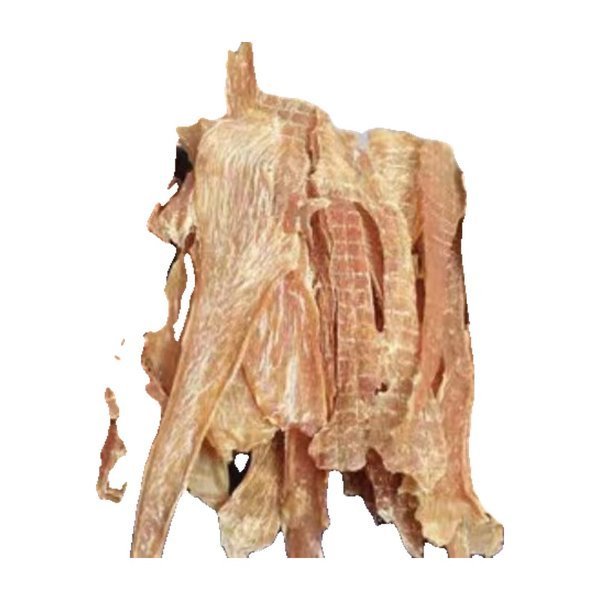
Whole-muscle chicken jerky keeps the natural grain of the breast visible. It is the clearest format for a premium, meat-first story and the easiest for a buyer to understand at a glance. Whole Chicken Tenderloins are a useful reference for this style.
Ask for a target length, width and thickness range rather than “large pieces.” Thickness controls drying time and final texture, while natural variation affects how many pieces fit in each pouch. Set a limit for broken pieces as a percentage of pack weight and confirm whether the product will be sold as whole fillets or smaller jerky strips.
2. Chicken-wrapped vegetable treats
Wrapped treats combine a chewy strip of chicken with a vegetable core such as sweet potato. They photograph well, give the shopper two visible ingredients and create more chewing time than a thin slice. Chicken-Wrapped Sweet Potato Sticks are a typical example.
The key specification is the meat-to-core ratio. Two factories can quote the same product name while supplying very different amounts of chicken. Also define the diameter and length of the core, how tightly the meat is wrapped, the acceptable amount of exposed core and the limit for loose chicken in the bag.
3. Thin slices for everyday rewards
Slices are easy to portion, easy to pack and versatile across dog sizes. They can be made from chicken alone or include a visible ingredient such as flaxseed, cranberry or cucumber. Examples in the SAGEIC range include Flaxseed Chicken Slices and Cranberry Chicken Slices.
For a sliced treat, specify diameter or length, thickness, weight per piece and pieces per retail pack. If an inclusion appears in the product name, lock its percentage in the formula and have the final name reviewed against the rules in your destination market. Our guide to dog treat label requirements explains why ingredient percentages and product names must agree.
4. Rings, rolls and other shaped treats
Shaped products give a range visual variety and make it easier to build recognizable hero SKUs. Chicken Donuts pair chicken breast with a sweet-potato ring, while Chicken Snowflake Rolls use a rolled format.
Shape introduces additional controls. The buyer should define outside diameter, hole size, weight per piece, deformation limits and breakage after transport testing. A beautiful sample is not enough if half the rings arrive cracked after ocean freight.
5. Soft sausage slices
Sausage-style treats use ground meat and supporting ingredients to create an even, softer bite. Chicken Sausage Slices can work as a dog-and-cat crossover format when piece size, recipe and feeding guidance suit both species.
This format is less visually “whole meat” than a tenderloin, but it offers consistent piece weight and texture. Ask for the full formula, including starches, humectants and vitamin or mineral premixes. Set a firmness reference against the approved sample so later lots do not become too rubbery or too brittle.
6. Chicken fillets with functional inclusions
A whole or formed chicken fillet can carry a small inclusion such as flaxseed, cranberry or mushroom powder. This creates a more differentiated shelf story without leaving the familiar chicken category. The inclusion should have a clear technical purpose, a fixed percentage and claims that are appropriate for a treat—not a medicine.
Ask the supplier how evenly the inclusion is dispersed and whether it changes color, oxidation or shelf life. If you plan to use a structure/function claim, have the wording and supporting evidence reviewed in the destination market before packaging is printed.
7. Chicken-wrapped natural chews
Chicken wrapped around natural chew cores such as trachea, rabbit ears or rawhide gives a longer, more varied chewing experience than a slice or vegetable wrap. SAGEIC examples include Chicken-Wrapped Trachea and Chicken-Wrapped Rabbit Ears. These formats help a brand add a longer-lasting chew to a chicken-led range without moving into a different manufacturing process.
Specify the core species, core dimensions, meat-to-core ratio, exposed-core limit, wrap tightness and broken-piece allowance. For rawhide or cartilage cores, provide size-matching and supervised-feeding guidance, and avoid unsupported digestibility or dental claims.
Format Comparison at a Glance
| Format | Best retail role | Main specification risk | SAGEIC example |
|---|---|---|---|
| Whole-muscle jerky | Premium, meat-first hero SKU | Natural size variation and breakage | Whole Chicken Tenderloins |
| Wrapped vegetable treat | Visible two-ingredient chew | Meat-to-core ratio and loose wrapping | Chicken-Wrapped Sweet Potato Sticks |
| Thin slice | Everyday reward or training | Thickness and inclusion consistency | Cranberry Chicken Slices |
| Ring or roll | Distinctive shelf appearance | Shape deformation and transit breakage | Chicken Donuts |
| Soft sausage slice | Small dogs, seniors, crossover range | Formula transparency and texture drift | Chicken Sausage Slices |
| Fillet with inclusion | Differentiated or functional story | Claim support and even distribution | Mushroom Chicken Breast Fillets |
| Chicken-wrapped natural chew | Longer chew and range extension | Core sizing, wrap tightness and breakage | Chicken-Wrapped Trachea |
What to Put in a Chicken Dog Treat Specification
A product name and a reference photo are not a specification. Before approving samples, agree on the following in writing:
- Formula: every ingredient and percentage, including glycerin, sorbitol, starches and premixes.
- Protein identity: chicken breast, another chicken cut or a blend; single animal protein if that claim matters.
- Piece dimensions: length, width, thickness, diameter and an acceptable tolerance.
- Piece and pack weight: average piece weight, net pack weight and expected pieces per pack.
- Texture: soft, chewy, firm or crisp, anchored to an approved golden sample.
- Guaranteed analysis: minimum crude protein and fat, maximum crude fiber, moisture and any additional declared guarantee.
- Water activity: a limit verified with the actual recipe and packaging, not copied from another product.
- Microbiology: organisms, limits, sampling method, test frequency and whether testing is in-house or third-party.
- Appearance limits: color range, exposed core, broken pieces, powder, foreign material and shape defects.
- Packaging: material structure, dimensions, zipper, seal, nitrogen flush, oxygen absorber and carton count.
- Shelf life and storage: unopened life, after-opening guidance and conditions for storage and transport.
Moisture and texture are related but not identical. Two chicken treats can have the same maximum moisture and still feel different because of thickness, drying profile and humectants. For a deeper specification checklist, see dog treat shelf life, water activity and packaging.
Quality-Control Questions to Ask a Supplier
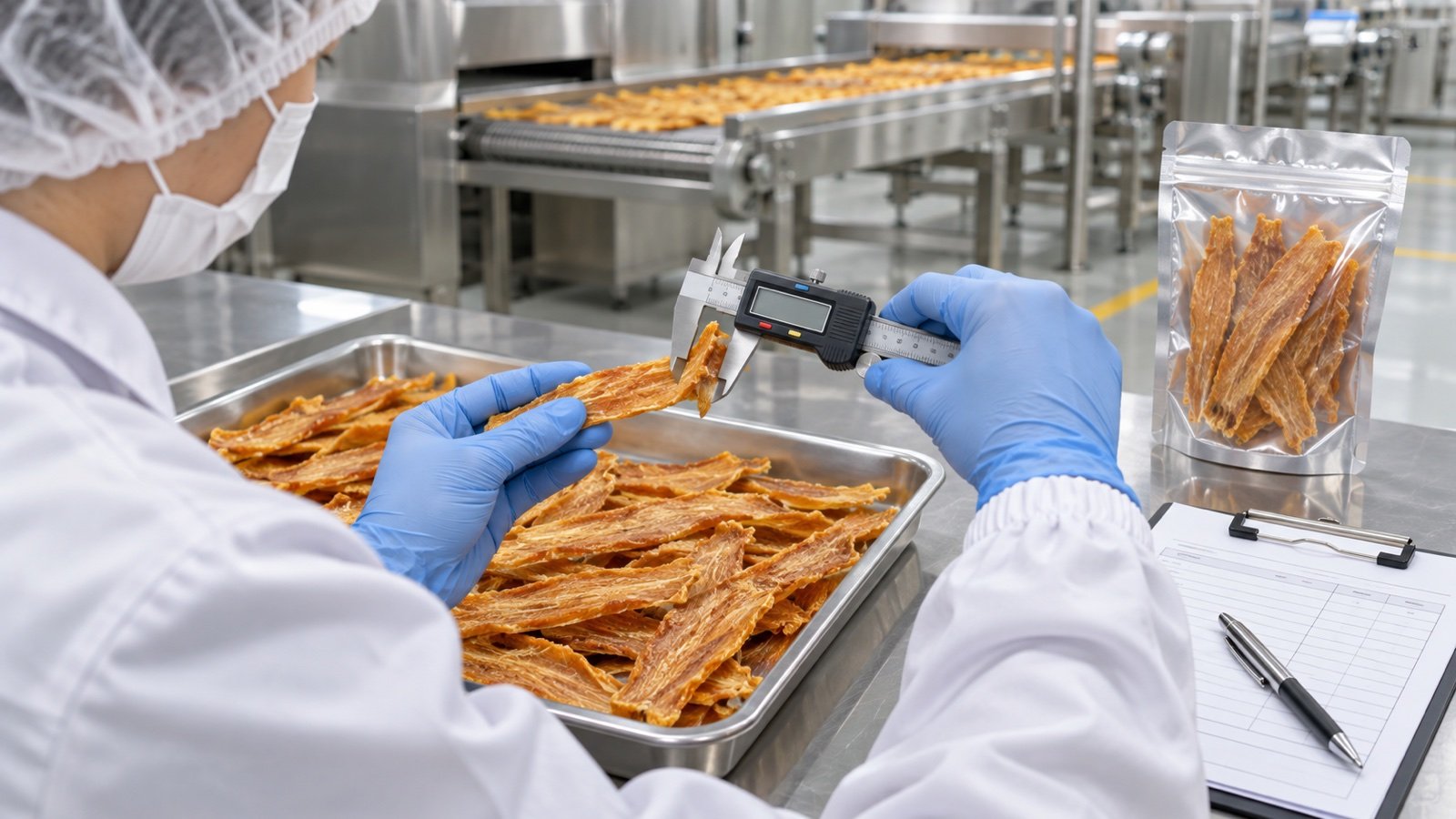
A professional chicken dog treats wholesale supplier should be able to answer these questions with documents, records or a live factory walkthrough:
- Does the food-safety certificate cover the product and process you are buying?
- How is incoming chicken approved, identified and held under temperature control?
- Which measurements are taken during slicing, wrapping, drying and packing?
- Is moisture checked on every lot, and how often is water activity verified?
- Which microbiological tests are run, using what sampling plan?
- Can one finished lot be traced back to raw-material lots, line records and test results?
- How are metal detection, seal integrity, net weight and label checks documented?
- Can the supplier run a mock recall and provide a certificate of analysis?
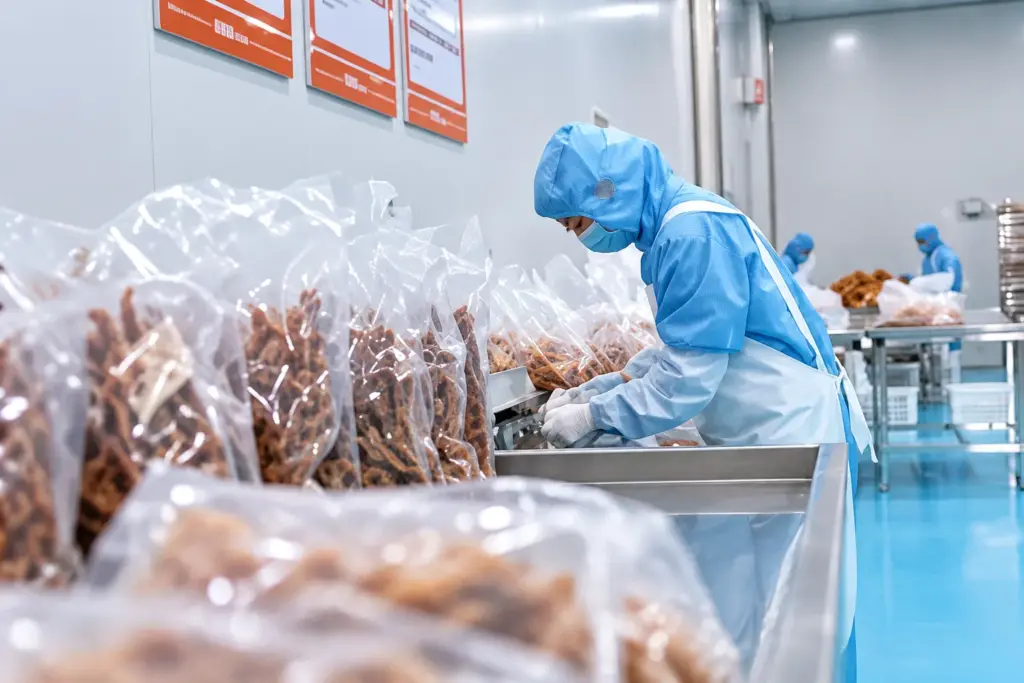
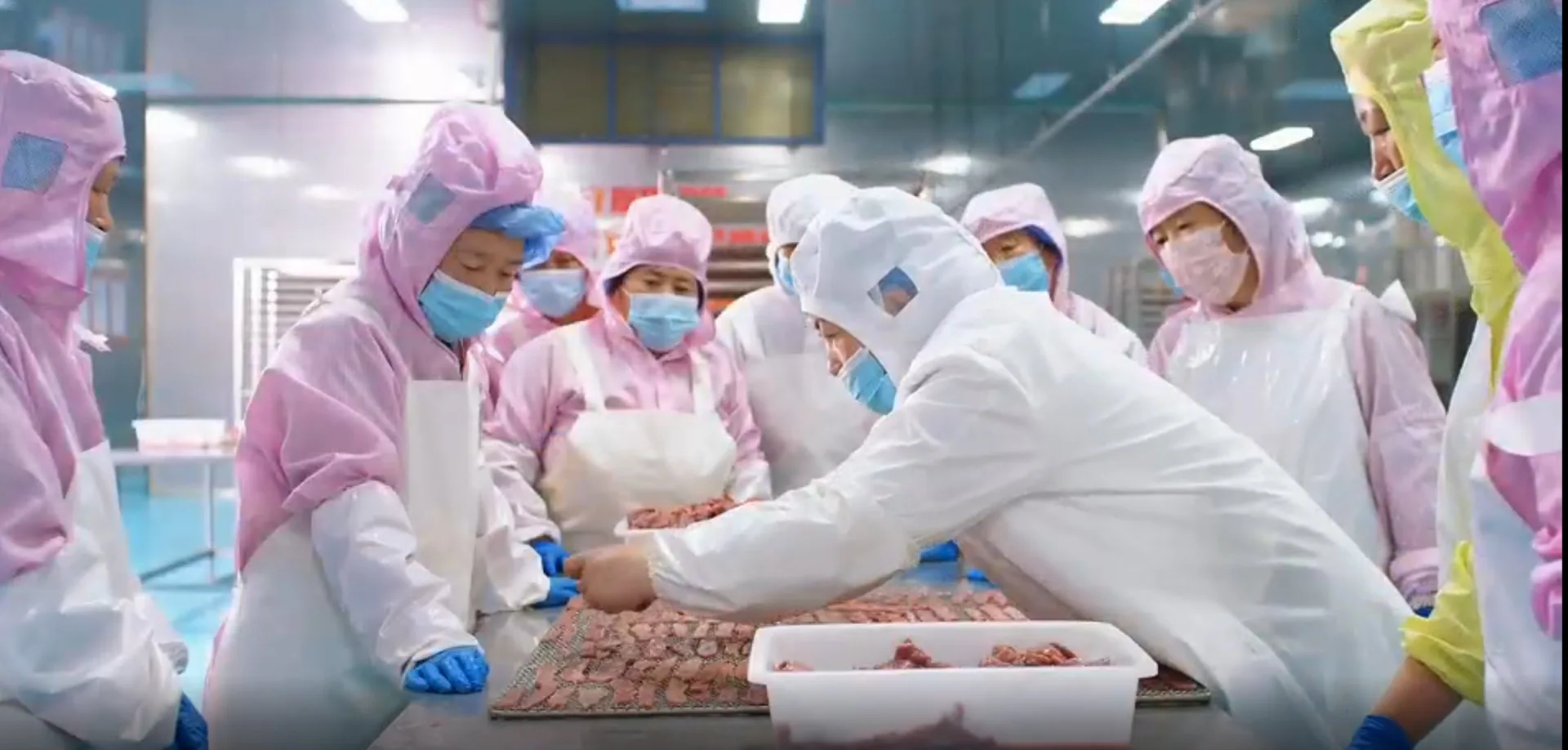
SAGEIC produces in a BRCGS-certified plant with batch records managed through MES, ERP and WMS systems. Our in-house lab checks moisture, protein, fat and microbiology, with third-party testing available when a customer or destination market requires it. You can review the certificates and traceability controls on our quality page or see the plant in the factory tour.
Packaging for Wholesale and Private Label Chicken Treats
Choose packaging after the recipe and piece size are known. Large tenderloins need a wider pouch and careful filling to avoid folds. Rings need enough headspace to prevent crushing without leaving the pack looking empty. Natural-core wrapped chews need protection from breakage and pack dimensions that match the piece length. Soft, higher-moisture treats need strong oxygen and moisture barriers.
- Bulk cartons: suitable when the importer or retailer repacks locally.
- Stand-up and zipper pouches: the standard retail option, with a large printable area and resealability.
- PET jars: good shelf visibility and crush protection, but higher freight volume.
- Display boxes: useful for small packs, checkout products and multipack programs.
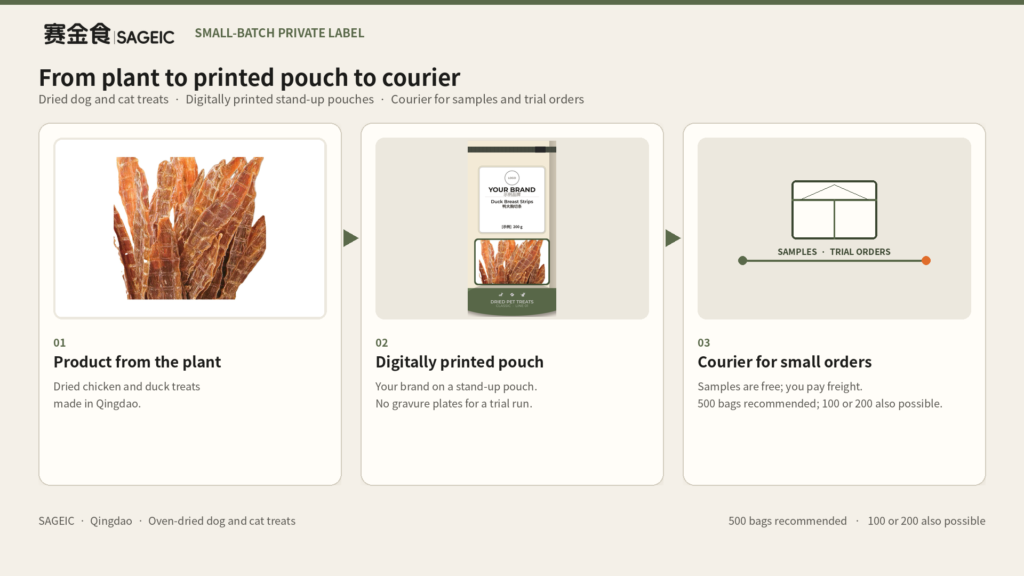
Ask for the film structure, seal test, zipper type and carton configuration. Nitrogen flushing and an oxygen absorber can help protect color and flavor, but they do not correct an unstable recipe or a poor seal. SAGEIC offers bulk and retail-ready packaging through its OEM, ODM and private label service.
From Brief to Shipment: A Practical Buying Process
- Define the range. Choose the customer, channel, retail price and role of each SKU.
- Send a one-page brief. Include format, formula direction, piece size, pack size, market, expected volume and target launch date.
- Shortlist existing recipes. Starting from a proven product reduces development time and gives you a realistic cost baseline.
- Order and score samples. Check formula, dimensions, texture, aroma, breakage, analysis and pack fit. Use our seven-step sample evaluation guide.
- Approve a golden sample and specification. Keep a sealed reference from the approved sample lot.
- Finalize artwork and compliance. Confirm the ingredient statement, guaranteed analysis, net quantity, species and responsible-company details for your market.
- Run first production with extra checks. Review the pre-shipment sample, test results, pack photos and carton marks before release.
- Ship with the correct documents. Agree on FOB or CIF, import responsibilities and destination-market paperwork before production. Our shipping guide covers the practical sequence.
At SAGEIC, existing-range samples typically take 2–3 weeks after the brief is confirmed, and bulk production typically takes 30–45 days after artwork approval. There is no minimum order quantity for the treats themselves, although custom-printed packaging may carry a printer minimum. A small mixed trial order is often the fastest way to learn which chicken formats your market will reorder.
FAQ
What are the most common chicken dog treats bought wholesale?
The core formats are whole-muscle jerky and tenderloins, thin slices, chicken-wrapped vegetable and natural chew cores, rings and rolls, soft sausage slices and fillets with functional inclusions. A balanced private label range usually combines a premium fillet, an everyday slice and one visually distinctive wrapped or shaped product.
Can chicken dog treats be made as a single-protein product?
Yes, but “single protein” and “single ingredient” are not the same claim. A treat may use chicken as its only animal protein while still containing vegetable glycerin, sorbitol, starch or a plant inclusion. Ask for the complete formula and define the exact claim before sampling.
What should I ask a chicken dog treat manufacturer to quote?
Provide the format, ingredient direction, piece size, guaranteed analysis target, pack type and net weight, destination market, estimated quantity and trade term. Ask the quotation to separate product, packaging, testing, tooling and freight so competing offers can be compared on the same basis.
How long do private label chicken dog treats take?
For SAGEIC projects, samples typically take 2–3 weeks after the brief is confirmed, and production typically takes 30–45 days after artwork approval. Add label review, packaging printing and transit time to the launch plan.
What shelf life do dried chicken dog treats have?
SAGEIC’s standard dried range carries an 18-month unopened shelf life when packed and stored as specified. The correct shelf life depends on recipe, moisture, water activity, fat oxidation, packaging and storage, so it should be supported by testing on the final product and pack.
Can I mix several chicken treat formats in one order?
Yes. SAGEIC allows mixed products and trial quantities, which lets a new range test several formats before scaling the strongest sellers. Printed pouches may have their own minimum order, so stock pouches or labels can be more efficient for the first run.
How do I verify the quality of a wholesale chicken treat supplier?
Verify certificate numbers and scope with the issuing body, review batch test records, ask for a traceability demonstration, evaluate sealed samples and inspect the factory by video, on site or through a third party. Do not rely on certificates or product photos sent as screenshots.
Build a chicken treat range for your market
Tell us your target market, sales channel, preferred formats and pack sizes. We’ll shortlist chicken treats from our 1,000+ SKU library, share specifications and prepare a mixed sample box for evaluation. Email sales@sageicpet.com or WhatsApp +86 176 6960 6473.